Toys & Play Guide
Backyard Games for Dogs: Nose Games, Fetch, Tug and Obstacle Courses
Short answer
The best backyard games for dogs are ones you play together, because a dog left alone outside often lies around or digs. Rotate hide-and-seek and toy searches, fetch variations, tug on dry, level ground and a low homemade obstacle course. Keep sessions short, play at cooler times in summer and match games to your dog’s age.
Why a dog alone in the yard isn’t playing
Opening the back door feels like exercise, but watch from the window and you will often see something else. The American Kennel Club’s piece on whether dogs can get all the exercise they need in the backyard observes that many dogs spend their yard time lying in favorite spots rather than running around, and that most need their owner’s encouragement to exercise. A bored dog with space and nothing to do may make up a game you won’t like: running the fence line, barking at everything that passes or digging up the flower bed.
What turns a yard into a playground is you: ten minutes of hiding, throwing and tugging together gives your dog more to do than a long afternoon out there alone. Nor does the yard replace walks and their new smells; our dog walking games make those outings more interesting too.
Before you play: a quick yard safety check
Walk the yard before the first game and glance over it before each session. A dog chasing a toy watches the toy, not the ground.
- Fence and gates. Look for gaps, loose boards and hollows dug under the fence, and check that every gate latches.
- Plants. Check beds, borders and pots against the ASPCA’s toxic plant list for dogs, and fence off anything on it that your dog might chew.
- Garden products. Store fertilizer, slug and snail bait, rodent bait and other pesticides sealed and out of reach, and keep your dog off a treated lawn for as long as the label says. The ASPCA also flags cocoa-hull mulch and compost, so keep the compost bin closed.
- Holes and clutter. Fill holes, coil the hose and put away rakes and stakes. Pick up sticks and anything small enough to swallow.
- Hot surfaces. Patios, decking and artificial turf get very hot in the sun. Use the AKC’s hot pavement test: if you can’t keep your hand on a surface comfortably for ten seconds, it is too hot for paws.
- Water. Fence off a pool or pond, and never leave your dog alone in the yard with open water. Not every dog swims well or can find the way out.
- Shade and a full water bowl, set out before the first game rather than after it.
Safety note
If you think your dog has eaten a plant, mulch, bait or another garden product, don’t wait for signs. Phone your veterinarian, or ASPCA Animal Poison Control on (888) 426-4435 (a consultation fee may apply), and have the packaging, or a photo of the plant, ready.
Hide-and-seek and hidden-toy searches
Nose games scale up well outdoors, where trees, sheds and garden furniture give you far more hiding places than a living room. Our guide to indoor games for dogs teaches hide-and-seek and find-the-toy step by step; here is how to stretch them across a yard.
Hide-and-seek in the yard
Once your dog knows the game indoors, play it inside a secure fence. Outdoors your dog has to find you among new smells and noises, so start with spots they can almost see, such as behind a tree or the corner of the house, then work up to the far side of the shed. Every find ends with your dog running to you: recall practice among real distractions.
Scatter feeding and treasure hunts
- Scatter feeding. Toss a handful of kibble across a clean patch of short grass, free of droppings and untreated by lawn products, and let your dog hunt it down, or hide a food-dispensing toy to keep food off the ground. Count it as part of the day’s ration.
- Treat trail. Walk a curving path across the lawn, dropping a small treat every few steps, with a toy or a bigger reward at the end. It is slow and steady, which suits older dogs.
- Toy treasure hunt. Once your dog finds a toy indoors on a “find it” cue, hide it outside: in longer grass, at the base of a shrub, behind a flowerpot, then out of sight behind the shed.
- Box search. Set out three or four open cardboard boxes and drop a treat or a toy in one. Shuffle them between rounds, and add boxes as your dog gets quicker.
Fetch variations and chase-the-toy games
These games assume a dog who already chases a toy and brings it back. If yours doesn’t yet, start with how to teach a dog to fetch, which covers the return and the drop. Once fetch is reliable, the yard lets you change the game:
- Wait-for-it fetch. Ask for a sit and a short wait, throw, then release your dog with a word such as “okay.” It builds self-control and gives your dog a breather between runs.
- Search fetch. Throw the toy into longer grass or behind a bush while your dog watches, so every run ends in a short search. It mixes nose work with running and slows down a dog who would sprint nonstop.
- Go and come. Toss a plain treat a few yards away and say “go get it.” As your dog finishes it, call them back in an excited voice and pay with something better.
- Monkey in the middle. Two people toss a toy low between them while your dog tries to intercept it. Let your dog win often, and stop if fun turns into frustration.
Start with low, rolling throws rather than high lobs that tempt a dog to leap, twist and land awkwardly. Use a toy made for fetch rather than a stick, which can splinter and injure a dog’s mouth or throat. Play in sets: a handful of throws, a drink and a rest in the shade, then another set if your dog is still keen. Stop while they still want more.
Leave out games in which you chase your dog, or your dog chases you. VCA Animal Hospitals’ guide to play and training warns that the first teaches a dog to keep away instead of coming when called, and the second can leave a dog highly aroused when they catch up, a particular risk with young children around.
Tug in the yard: grip, footing and rules
Outdoors, get the footing right first. Play tug on dry, level grass; wet grass, mud, loose gravel and slick decking let paws slide out in the middle of a hard pull. Keep the game well away from steps, fences, the patio edge and garden furniture, and leave your dog room to back up.
The rules don’t change outside: keep the toy low and pull side to side so your dog’s front feet stay on the ground, use light resistance with puppies and seniors, and pause for a drop between short rounds. Ask your veterinarian before playing tug with a dog who has dental, neck or back problems. If your dog won’t let go on cue yet, the tug section of our guide to toys for dogs who destroy toys explains how to teach a drop cue.
A yard adds one temptation: a dog who wins the toy can sprint off to the far fence with it. Don’t give chase; walk away or offer a trade.
These picks are limited to the two dog toys in Nilosi’s own catalog; any long, sturdy toy your dog enjoys will work, and you can browse our toys and play range.
-
Fire Hose Crocodile Dog Toy, View product
$30.95
Why it fits: About 26 inches of stuffing-free fire hose, long enough to leave room between your hand and your dog’s mouth in yard tug, with squeakers that keep working after a puncture.
-
Realistic Plush Fox Dog Toy with Squeaker, View product
$30.95
Why it fits: A soft plush fox for gentle to moderate chewers: the 6-inch tail gives a handle for light tug with a puppy or senior, and the body is easy for a dog to carry back from a toy hunt.


Bring toys inside when the game ends: a toy left in the yard becomes a chew toy nobody is watching. No toy is indestructible, so check seams and squeakers after outdoor play and throw a toy out once it starts to come apart.
A backyard obstacle course from household items
A homemade course works body and brain at once. Keep every obstacle low and stable, set it on grass rather than paving, and use pieces that give way if bumped.
- Jump: a broom handle or a length of PVC pipe resting across two upturned flowerpots, a few inches up, or lying on the grass for puppies.
- Tunnel: a large cardboard box opened at both ends, or a children’s play tunnel weighed down so it can’t roll.
- Weave: five or six upturned flowerpots or plastic cones in a line, spaced for a loose zigzag.
- Hoop: a hula hoop held upright with its bottom edge on the grass, for your dog to step through.
- Plank: a wide board lying flat on the lawn to walk along, never raised.
- Pause spot: a doormat where your dog lies down for a count of three before the next obstacle, which teaches calm in the middle of excitement.
- Teach one obstacle at a time, luring your dog over, through or around it with a treat held at nose height, and reward every try, even a single paw.
- Once two or three pieces are easy on their own, set them in a short line and walk your dog through, rewarding at the end.
- Stay at a walk beside your dog. Speed can come later, and for many dogs it never needs to.
- Change the order or swap one piece next session, so your dog keeps thinking rather than running on autopilot.
Safety note
Keep jumps for puppies at ground level. The AKC explains that a puppy’s growth plates don’t fully close until at least 12 months, and says puppies shouldn’t be asked to jump in extreme or competitive situations until they are at least 12 to 15 months old, or older for giant and slow-maturing breeds. Give senior dogs and dogs with sore joints walk-through pieces such as the plank, hoop and tunnel, and ask your veterinarian what is safe.
Water play and heat: keeping summer games safe
Summer is when backyard games carry the most risk: dogs cool down mainly by panting, and an excited dog will keep chasing long after they should stop. On hot days, play early or late, keep sets short, stay in the shade and offer water at every break. The AKC’s overview of overheating signs and prevention names flat-faced breeds, thick or double coats, dark coats, and older or overweight dogs as more vulnerable; for them, swap running games for nose games in the shade.
- Sprinkler fetch. Throwing a toy through a gentle sprinkler helps a dog stay cool. Don’t let them bite at the spray: the AKC warns that even play-biting the stream from a hose or sprinkler can lead to water intoxication, and toy and small dogs are at greater risk.
- Wading pool. A few inches of water in a children’s pool gives a hot dog somewhere to stand and splash. Supervise, and tip the water out afterward.
- Pool fetch. Only for confident swimmers who know where the steps are. Dogs swallow water each time they grab a floating toy, so keep throws few and breaks frequent, with a chance to pee between swims. The AKC suggests a flat toy such as a flying disc rather than one that makes a dog open wide.
Safety note
Heavy, frantic panting, thick saliva, a bright red tongue or gums, a struggle to breathe, weakness, vomiting or collapse all mean the game ends now. Move your dog somewhere cool, wet the coat down to the skin with cool (not ice-cold) water and call your veterinarian, even if your dog seems to recover. After water play, lethargy, a bloated belly, vomiting, loss of coordination, pale gums or dilated pupils can mean water intoxication: go to your veterinarian or an emergency clinic straight away.
Matching games to puppies, adults and seniors
Start from your dog’s age, energy and health, then let personality decide the rest.
| Dog | Games that suit | Go easy on |
|---|---|---|
| Puppy | Scatter feeding, close hide-and-seek, light tug, bars on the ground | Jumps, long fetch, hard tug |
| Energetic adult | Wait-for-it and search fetch, monkey in the middle, a low course | Nonstop fetch, midday summer play |
| Easygoing adult | Treasure hunts, box searches, short fetch sets | Coaxing play past interest |
| Senior | Treat trails, slow searches, light tug, walk-through obstacles | Jumps, sprints, sharp turns, wet grass |
| Flat-faced or heavy-coated | Nose games in the shade at cool times of day | Running games in warm weather |
End a puppy’s game before they turn frantic, and let them nap afterward. A dog who gets wound up by fast games does better with waits, the pause spot and a sniffing game to finish; a dog who ignores toys may still love searching for food or for you. For session length at each age, see how much playtime a dog needs. If your dog is stiff, limping, overweight or has a heart or breathing condition, ask your veterinarian before adding running or jumping games.
Back inside: paws, coat and a drink
End with a slow lap of the yard and some sniffing, so your dog walks back to the door instead of charging through it. Then take a minute on the step:
- Paws. Knock off loose grass and soil, wash or wipe away mud or sand, and dry between the pads. The routine for cleaning dog paws after a walk works just as well after a yard session.
- Coat and toes. Run your hands over the coat, under the legs and between the toes for burrs and grass seeds. Some seeds can work into the skin, so if your dog keeps licking a paw or starts limping afterward, have your veterinarian take a look.
- A drink and a rest. Fresh water, then a quiet spot to settle while the excitement wears off.
From Nilosi’s catalog, these three cover the drink and the doorstep; a bowl from the kitchen and an old towel work too.
-
Flipo
Fold-A-Bowl Dog Water Bottle with Fold-Out Bowl, Choose color
$28.95
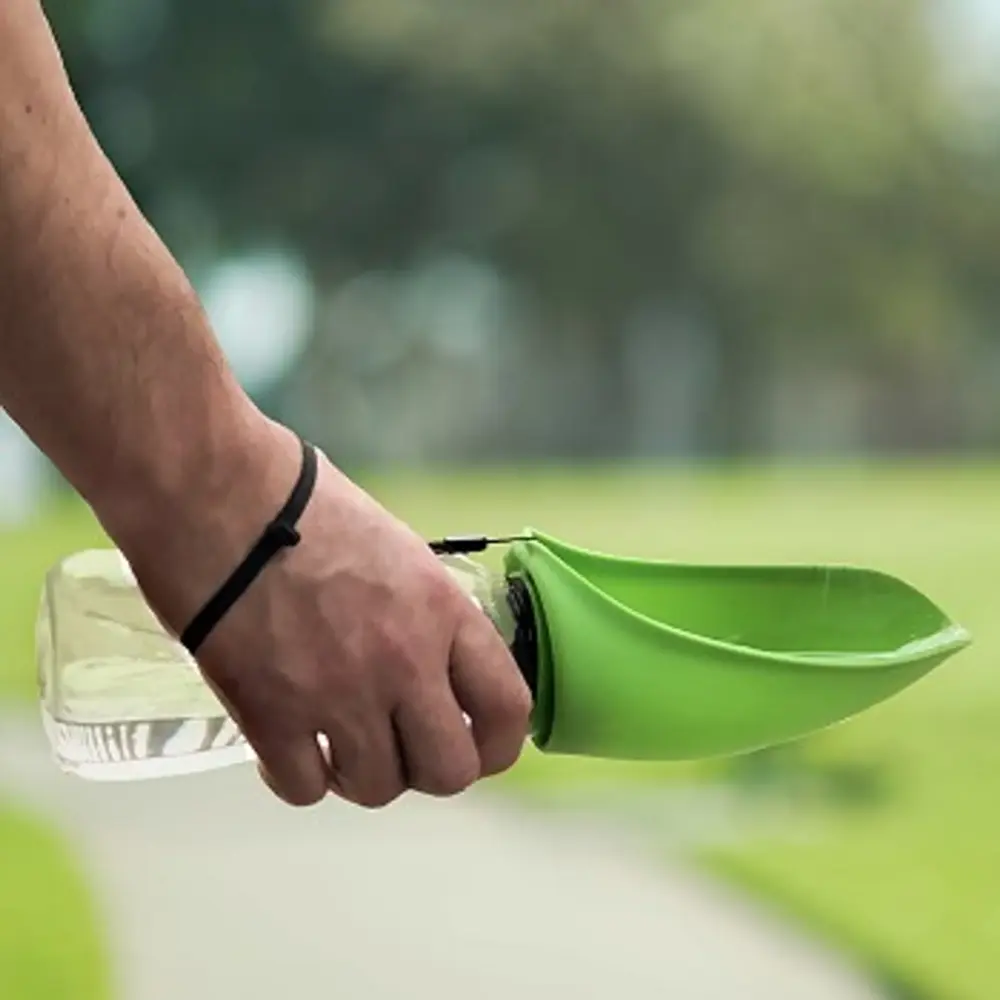
Why it fits: Handy when the game spot is far from the house: the 26 oz bottle’s cover folds out into a bowl, so a drink between fetch sets doesn’t mean a walk back to the kitchen.
-
Bark Fifth Avenue
Fabulous Paws Dog Paw Cleaner Cup, Choose size & color
$31.95
Why it fits: For muddy or sandy paws after yard play: add a little water, twist each paw among the soft silicone bristles at the back door, then pat dry before your dog reaches the floor.
-
Mr. Peanut’s
Naturals Pet Wipes
$26.95
Why it fits: Large, thick 6 x 10 in wipes for dry days when paws are dusty rather than muddy, and for a quick wipe of grassy legs or belly before your dog comes in.
Currently out of stock



Related guides
-
Checklist
What to Bring to the Dog Park (and What to Leave at Home)
A dog park checklist for the first visit and every one after: what goes on your dog and in your bag, what to leave at home, how to scout a park and use the double gate, the signs it's time to go, and a quick cleanup for paws and car seats before the drive home.
-
How-to
How to Teach a Dog to Fetch, Even One Who Won’t Bring It Back
Teach fetch from zero: choose a toy your dog can carry, start with short hallway throws, make the return the best part of the game and teach a drop without a tug-of-war. Then move outside on a long line, with breaks and water on hot days.
-
Checklist
Winter Hiking With a Dog: Checklist for Cold, Ice and Short Days
A winter trail-day checklist: plan a shorter, sheltered route around daylight, keep your dog leashed and off frozen water, pack water that won't freeze and a coat for dogs who feel the cold, check paws for ice balls and salt, and know when to turn back.