Toys & Play How-to
How to Teach a Dog to Catch: From Treat Tosses to a Soft Toy
Short answer
Ask your dog to sit about two feet away and toss a favorite treat in a slow arc toward their mouth. If it hits the floor, scoop it up before your dog can, so catching is the only way to win. Do about five tosses, three to five times a day, then move on to a light, soft toy.
A dog who lets a treat bounce off their nose usually isn’t being slow or stubborn. Catching takes timing that many dogs have never practiced, and a miss costs them nothing: the treat lands on the floor, where they can collect it anyway. Teaching a catch changes both. Each toss is easy enough that one snap of the jaws wins, and a miss stops paying.
What you need before the first toss
Catching is a timing game, so set your dog up to succeed before the first toss.
- A sit your dog can hold for a few seconds. A seated dog stays at the same distance and height for every toss and is less tempted to lunge or jump for it.
- Small, soft treats your dog loves. Strong-smelling ones hold attention best. Size them to your dog: big enough to spot in the air, small and soft enough to eat in a bite or two.
- A quiet room with a clear floor in front of your dog. You need to reach a missed treat before your dog does, so skip the shaggy rug, where misses hide, and the busy kitchen. A low-pile rug or mat under your dog gives grip.
- A dog who is alert and a little hungry. Just before a meal works better than straight after one, when treats are worth less.
- One soft toy for later, kept aside for this game rather than left out with the everyday toys.
Step by step: teaching the first catch
- Ask for a sit with your dog facing you, about two feet away. Kneel or sit on the floor so your hands are close to your dog’s head height.
- Show the treat and hold it still just above your dog’s nose until their eyes are on it. A dog watching your face instead of your hand will miss.
- Toss it underhand in a slow, short arc that would land on the mouth, not the eyes. The first tosses can be little more than a drop.
- Caught it? Say yes and praise warmly. Missed? Scoop the treat up or cover it with your hand before your dog gets there, then reset the sit and try again.
- Stop after about five tosses, while your dog still wants more.
- When your dog catches most tosses, say catch just before you let go, so the word starts to mean food is coming through the air.
- Add distance a step at a time and vary the arc a little. If misses pile up, go back to the last distance that worked.
Tip
Picking up the miss is what makes this work. The AKC’s guide to teaching your dog to catch says to scoop up a dropped treat before your dog can get it. Left on the floor, a miss still pays, so waiting stays easier than catching. Pick it up calmly, with no scolding, and toss again.
Safety note
If your dog stiffens, freezes over the treat or growls when your hand moves toward food, don’t race them for it. Pause this game and talk to your veterinarian, a certified trainer or a veterinary behaviorist about food guarding before you try again.
Moving from treats to a soft toy
Once your dog catches most treat tosses, try a toy. The AKC’s next step is light toys, such as tennis balls and lightweight cloth discs, so a miss that hits the face doesn’t hurt. A toy that stings on an early try can put a dog off catching for good.
A toy flies differently from a treat: it’s bigger and slower, and your dog has to open wider and time the bite. Make the first toy tosses easy again:
- Let your dog hold and carry the toy first, so it is familiar before it arrives through the air. If your dog shows little interest in toys, our guide to getting a dog interested in toys builds that first.
- Go back to two feet and a slow, low arc, at the height that worked with treats.
- Pay each catch with a treat, a few seconds of gentle tug or another toss, whichever your dog likes best.
- Trade the toy back for a treat rather than pulling it out of your dog’s mouth.
Choosing a toy to catch
Look for a toy that is soft, light for its size and too big to swallow. Size matters more than it seems: a toy small enough to vanish into your dog’s mouth can also be swallowed or get stuck in the throat, a risk Humane World for Animals flags in its dog toy safety guide. The same guide says to throw out tennis balls once they’re chewed through, so if you try one, pick a ball too big for your dog to swallow and check it after each session.
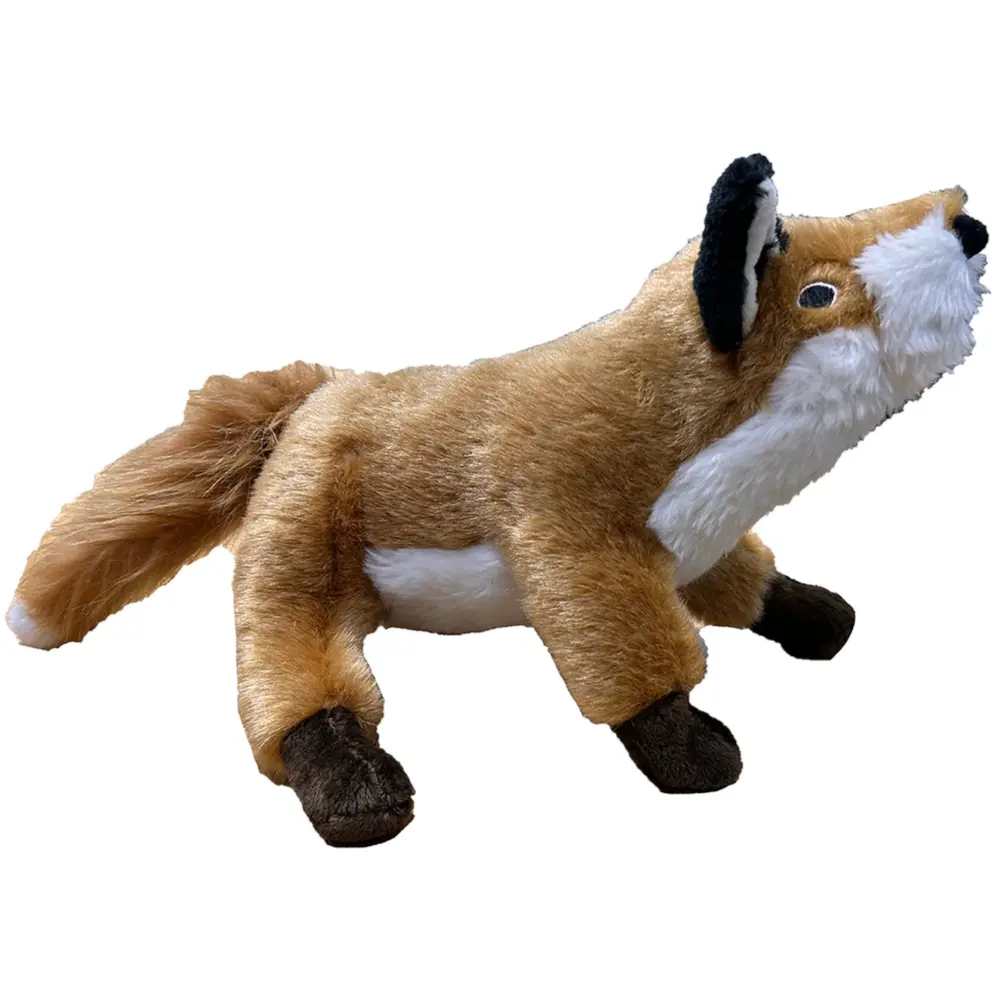
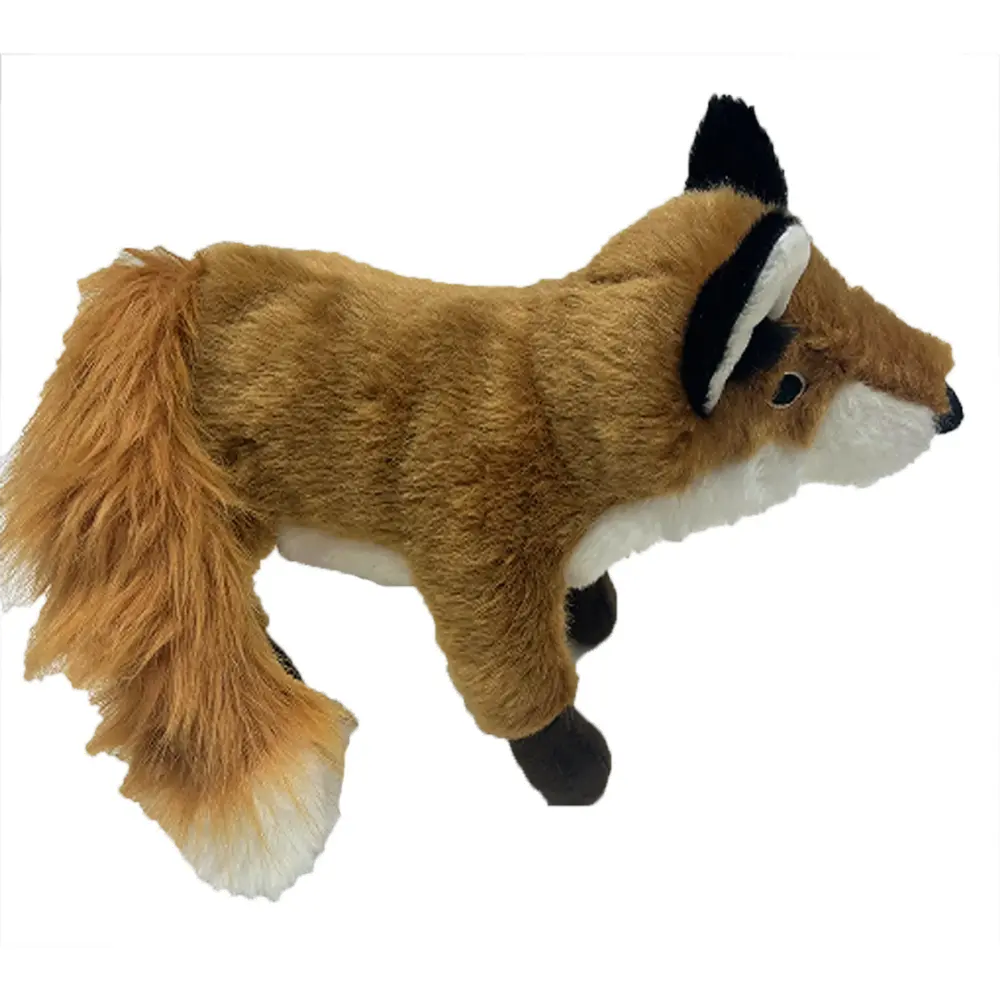
Nilosi sells just two dog toys, and only one suits catching. The Realistic Plush Fox Dog Toy with Squeaker is soft plush, about 10 inches from head to rear plus a 6-inch tail, so your dog has a body and a tail to close on, and the tail doubles as a handle for a quick tug after each catch. It’s made for gentle to moderate chewers and has a squeaker inside, so supervise play, put it away after the session and retire it if it’s damaged. For a very small dog, a 10-inch toy may be more than their mouth can close on in midair; a smaller soft toy that is still too big to swallow fits better. Our 26-inch fire hose crocodile is better kept for tug and fetch than tossed at a face; both are in our toys and play range.
Keeping the catch toy for this game alone helps it stay exciting. Our guide to how many toys a dog should have explains a simple rotation for everything else.
How often to practice
Little and often is the rule. The AKC suggests three to five short sessions a day, with about five tosses in each, practiced every day. Catching depends on timing, and short, frequent rounds keep your dog keen while that timing develops.
- End on a catch. After two misses in a row, make the next toss shorter and slower so the session finishes with a win.
- Count the treats. The AKC’s article on how many treats a dog can have says all treats, training rewards included, should stay within 10% of daily calories, with meals trimmed slightly to match.
- Keep puppy rounds shorter. Two or three tosses may be plenty for a young puppy with a short attention span.
- Expect uneven progress. Some dogs catch within a few sessions; others need weeks of easy tosses before it clicks.
Mistakes that make catching harder
- Throwing fast or hard. A treat that arrives like a pitch is hard to time and can startle a dog into ducking.
- Aiming at the eyes. A toss that heads for the eyes makes a dog blink and turn away; aim for the mouth.
- Adding distance too soon. Every step back lengthens the arc and makes the timing harder.
- Leaving misses on the floor. If the floor keeps paying, your dog keeps waiting for it.
Dogs who flinch or let it bounce
Watches the treat and doesn’t move
Make the catch almost automatic. Hold the treat just above your dog’s nose, wait for them to lick their lips or open their mouth, then let it drop the last few inches. Switch to a tastier, stronger-smelling treat, and be quick about picking up every miss. Lengthen the drop an inch or two at a time.
Flinches or turns away
To some dogs, something flying at the face feels like a threat. Go back to tiny drops from just above the nose, toss more slowly and aim a little lower, toward the chin rather than the eyes. Keep the room calm and your voice soft. If your dog still ducks after a few easy sessions, let catching go and play something they enjoy; not every dog needs this skill.
If a dog who used to catch well starts flinching, misjudging easy tosses or bumping into things, mention it to your veterinarian, since a change in eyesight or a sore mouth can show up this way.
Jumps up or breaks the sit
The toss is too high or too far. Keep the arc level with your dog’s mouth, ask for the sit again before each toss and only toss while your dog is sitting. A dog who launches upward for treats is practicing the leap you’ll want to avoid later with toys.
Grabs at your fingers
Let go of the treat sooner and a little farther from your dog’s face, and move your hand away as you release. If your dog is mouthy in general, practice taking treats gently from a flat hand between catching sessions.
Catches treats but not toys
Shrink the gap again. Let your dog take the toy from your hand a few times, then drop it from just above their nose, the way you started with treats, and toss from closer, lower and slower than feels necessary.
Safe tosses: soft toys and no high leaps
Catching sends something straight at your dog’s face, so what you toss and how high you toss it both matter.
- Toss only what can’t hurt. Stick to treats and soft toys too big to swallow, never sticks, stones, hard balls or anything heavy. Check the toy for damage after each session.
- Low arcs, paws near the floor. A good catch takes a head turn or a small reach, not a leap. High lobs invite jumping, twisting and awkward landings.
- Puppies stay seated. The AKC’s article on helping puppies jump safely explains that growth plates aren’t closed until at least 12 months of age and that jumping on open growth plates can cause long-term damage, so keep a puppy’s catches seated and low.
- Go gently with seniors and sore joints. Keep to seated catches, and ask your veterinarian before any jumping game if your dog is stiff, overweight or has back trouble.
- Grip underfoot. If your dog moves for a catch, play on a rug or grass, not a slick floor.
- One dog at a time. A treat in the air between two dogs can start a squabble, so practice with each dog separately.
- Children toss under supervision, underhand and gently, to a dog who is sitting.
Safety note
Snatching a flying disc out of the air is a sport of its own, with jumps and twisting landings this page doesn’t teach. Ask your veterinarian whether it suits your dog before you try it, and never with a puppy whose growth plates are still open.
Catching as part of other games
Once your dog can catch, the skill turns up in plenty of other places:
- Fetch. Chasing and returning a thrown toy is a separate skill; our guide to teaching a dog to fetch covers the return and the drop. Many dogs enjoy a mix: a few fetches, then a short catching round while they get their breath back.
- Rainy days. A catching round fits neatly into the trick slot of our indoor games for dogs plan and needs only a few feet of floor.
- The yard. Gentle tosses can join games like monkey in the middle from our backyard games for dogs, as long as the throws stay low.
- Training rewards. A dog who catches can be paid from a few feet away without you getting up, which is handy when you’re rewarding a calm down on their bed or a sit at the door.
Related guides
-
How-to
How to Teach a Dog to Fetch, Even One Who Won’t Bring It Back
Teach fetch from zero: choose a toy your dog can carry, start with short hallway throws, make the return the best part of the game and teach a drop without a tug-of-war. Then move outside on a long line, with breaks and water on hot days.
-
How-to
How to Teach Your Dog the Names of Toys, One Toy at a Time
A step-by-step naming game: one favorite toy and one name, then household distractions, a second toy and a real choice between two. See what to realistically expect, how to tell whether your dog knows the word or is reading you, and how to fix guessing and favorite-grabbing.
-
Guide
Are Ball Launchers Bad for Dogs? Joints, Adrenaline and How Much Is Too Much
A launcher throws further than your arm and lets a dog sprint and brake repeatedly until something gives. This covers what repetitive fetch does to a body, the adrenaline problem behind the dog who never seems satisfied, and how to use a launcher without the downsides.