Home & Cleaning Checklist
Home Renovation With Pets: A Checklist for Dust, Fumes and Open Doors
Short answer
Give your pets a closed room far from the work, with a “Do not open — pet inside” sign, and tell every worker about it. Keep ID on, walks and meals on schedule, and sweep up nails, dust and paint chips each evening. For demolition, sanding or heavy painting, day boarding or a friend’s house is safer.
A move is one hard day. A renovation repeats the same risks for weeks: a door propped open for the crew every morning, new debris on the floor every evening, fumes that drift past the room being worked on, and strangers in the house at hours your pets usually nap. This checklist is for dogs and cats who stay home while the work goes on. If you’re leaving the house altogether, our checklist for moving with a dog covers that instead.
Renovation checklist at a glance
| When | The main jobs |
|---|---|
| Before work | A pet room, a door sign, a crew briefing |
| Every day | ID on, doors checked, an early walk |
| Loud hours | Door shut, radio on, a lick mat |
| End of day | Sweep debris, check paws and coat |
| Big jobs | Day boarding or a friend’s house |
Before work starts: the pet room and the crew
- A room as far from the work as the house allows, with a door that latches and windows that stay shut or screened
- Water, the usual bed and toys, a worn T-shirt that smells like you, and for a cat a litter box, a scratcher and somewhere to hide
- A few days of meals and naps in that room before work begins, so it isn’t new on the first loud morning
- A sign at eye level on the outside of the door: “Do not open — pet inside”
- A word with every worker, not just the crew lead, about which doors stay shut and where the pets are
- The schedule from your contractor, so you can book a sitter or day boarding for the days with demolition, sanding, floor finishing or heavy painting
- A plan for days the crew works while you’re out, with your cell number on the pet room door
Why the room comes first. VCA’s guide to home repairs and pet safety advises confining pets to a kennel or secure room, telling all workers there is a pet in the house and putting that sign on the door. A door held open for a load of drywall is all a cat needs to reach the hallway or a dog to reach the street.
Tip
Brief new people when the crew changes. A sign works only when everyone who might open the door has seen it, and painters and electricians often come on different days.
Renting? Repairs often happen on the landlord’s schedule. Ask for notice before maintenance staff enter, so you can shut your pets in or take them out, and put the door sign up on those days too.
ID on at all times, even indoors
- A collar with an ID tag showing a cell number you’ll answer during work hours
- A snug fit, with two fingers’ room underneath, so the collar can’t slip over the head
- Your microchip registry record checked for a current phone number and address
- For a cat who will wear one, a breakaway collar with a tag; indoor cats get out through open doors too
Why ID stays on indoors. VCA recommends a microchip and a collar with your contact details as a backup in case a pet gets out, and during a renovation doors and gates stand open far more than usual. A tag can be read on the spot by whoever finds your pet; a chip helps only if the registry has your current number. If your dog already rushes every open door, our guide on how to stop a dog darting out the door has the leash-and-gate routine to use while the crew comes and goes.
For dogs, the Lupine Pet Reflective Dog Collar has a strong D-ring for the leash and tags, with adjustable sizes from tiny dogs to XXL; measure the neck where the collar sits and choose the range that includes it. We don’t sell cat collars; if you buy one elsewhere, choose a breakaway style whose buckle snaps open if the collar catches.
Work-zone hazards to keep pets away from
VCA’s list of construction hazards includes exposed wires, nails, screws, chemicals, paint, insulation, spackle, putty, sawdust and ladders. The simplest rule: pets stay out of the work zone, including after the crew leaves for the day, until it has been cleaned up.
Nails, screws and wires
- Nails, screws and staples can cut paws or be swallowed. A magnetic sweeper picks them up faster than a broom.
- Lift hanging cords off the floor, as VCA suggests, and unplug power tools between jobs.
- Secure ladders, scaffolding and loose boards. A dog can knock one over, and a cat may climb it.
Paint, varnish and glue
- VCA warns that volatile organic compounds (VOCs) from paint, varnish, wood stripper and glue can make pets ill, and that cats are especially susceptible. Keep the pet room shut and well ventilated, and ventilate the work area too.
- VCA also notes that dogs find some adhesives appealing. Expanding polyurethane glues are a particular risk: Pet Poison Helpline explains that swallowed glue of this kind expands and sticks to the stomach, causing severe irritation and blockage. Keep tubes and caulk in a closed box or the crew’s truck.
- Paint on the coat: stop your pet licking it. VCA’s paint and varnish guide says it can be washed off with mild liquid dish soap or carefully clipped out, never cut with scissors, and warns against paint thinner, mineral spirits or other solvents on the skin without asking your veterinarian first. For glue on the coat, call your veterinarian.
Dust, sawdust and insulation
- VCA advises sweeping up sawdust to avoid inhalant allergies and stomach upsets. Cats also groom dust off their coats, so a dusty cat is a cat swallowing dust.
- Keep insulation, spackle and putty out of reach; a curious pet may chew or eat them.
- Ask the crew to seal off the work area’s doorways with plastic sheeting, so less dust drifts into rooms your pets use.
Older homes and lead paint
If your house was built before 1978, ask about lead before anyone sands or scrapes. The EPA notes that about three-quarters of U.S. homes built before then still contain some lead-based paint, that disturbing it can create dangerous lead dust, and that contractors paid for this work must be lead-safe certified. The Merck Veterinary Manual calls renovation of old houses a common route of lead exposure in small animals, and cats have been reported to swallow lead dust while grooming. Keep pets out of the house, or sealed well away, until that work and its cleanup are finished.
Safety note
Get emergency care right away if your pet chews an electrical cord, which VCA warns can be fatal, or steps on a nail: press on the wound to slow the bleeding and go to an emergency clinic. Call your veterinarian promptly if your pet swallows nails, screws, glue, insulation, spackle or paint chips, is hurt by a falling board or ladder, or drools heavily, vomits, strains to pass stool, has bloody stool or just seems off. If you think your pet swallowed something toxic, you can also call the ASPCA Animal Poison Control Center at (888) 426-4435, open 24 hours a day; a consultation fee may apply.
A retreat: the closed room, a carrier or a cave
- For a dog: the closed room, with a crate inside only if your dog already rests in one
- For a cat: a covered spot to hide in that room, such as a cave bed, a box on its side or a carrier left open
- The same room for the whole project, unless the work moves into it
- Fresh air in the room, but no open window onto the side of the house where the crew works
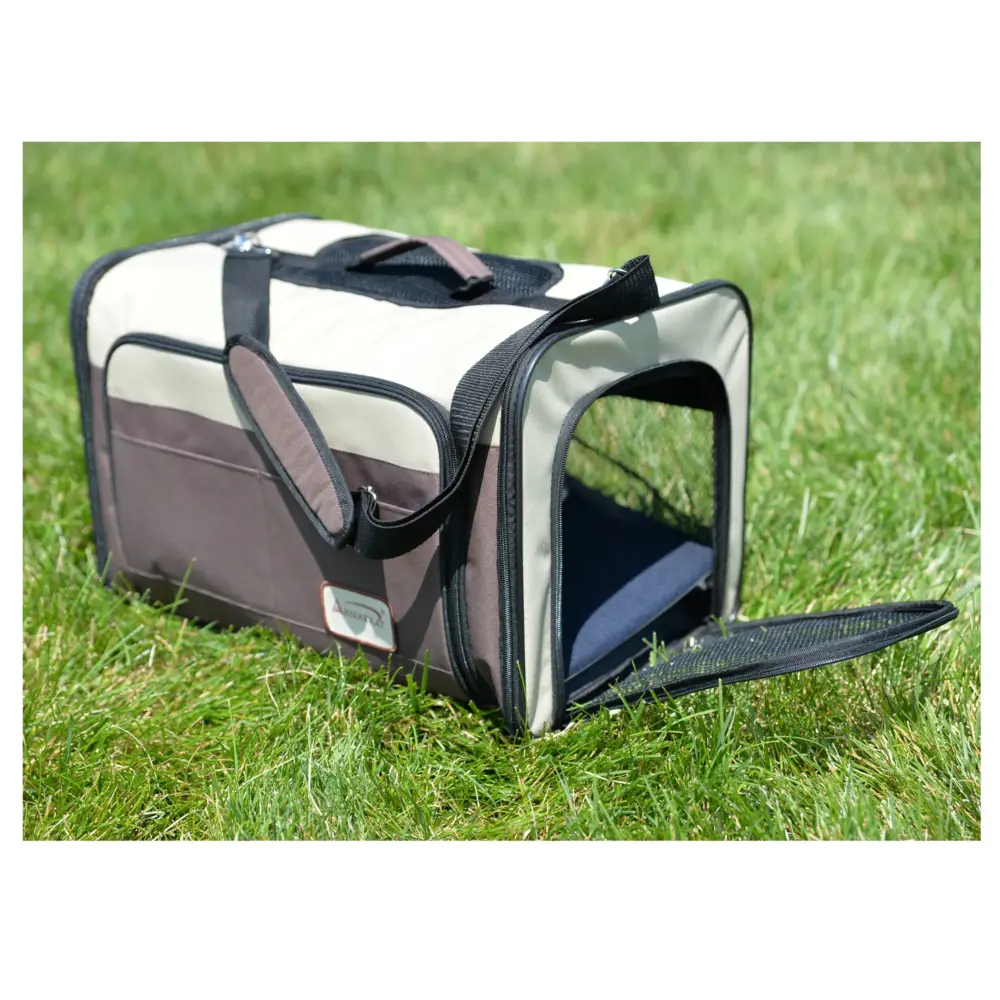
Why a carrier can double as a den. A carrier your cat already naps in is a hiding spot on loud days and a ready ride to a sitter if plans change. If your cat sees it only on vet day, it’s a scary box rather than a retreat; start well before the work with our guide to getting a cat used to a carrier.
Tip
Before the crew closes up a wall, a ceiling, a floor or the back of a cabinet, find your cat and see them with your own eyes. Cats explore new gaps and cavities, and the closed pet room makes this check quick.
-
Armarkat
Soft-Sided Pet Carrier, View product
$65.95
Why it fits: Doubles as a den in the pet room and the ride to a sitter; three zip openings and a lounge pad inside, made for cats and small dogs.
-
GOOPAWS
4-in-1 Self-Warming Cat Cave Bed, Choose color
$40.95
Why it fits: A covered place to hide in the closed room while the crew works, for a cat who copes by tucking out of sight; opens flat as a mat later.


Keep the routine, and plan for loud hours
Walks, meals and bedtime
- Walks and meals at the usual times, as VCA advises; a dog walked before the crew arrives is more likely to rest
- Bedtime and the usual toys unchanged, even when the evening is spent cleaning up
- Potty breaks through a door the crew doesn’t use, on leash if the fence or gate is part of the job
- If the litter box has to move into the pet room, move it before work starts, and keep a second box in the old spot if you can
Quiet jobs for loud hours
VCA suggests leaving a TV or radio on and closing the door to muffle construction sounds, plus a food puzzle to keep your pet busy. A lick mat is the easiest: spread soft food into the grooves, freeze it the night before for a longer session, and hand it over when the saws start. Stay nearby, and pick it up once it’s licked clean. Our guide to what to put on a lick mat has spreads for dogs and cats and how to clean it; check that any peanut butter is free of xylitol. The SodaPup Jigsaw Enrichment Lick Mat suits dogs and cats and goes in the dishwasher.
Where you can, plan the loudest hours around your pets: a long walk as the demolition starts, or daycare when the floor sander is booked. Pacing, panting, hiding all day, refusing food or accidents in the house mean the arrangement isn’t working; move the loud days elsewhere, and ask your veterinarian if the signs carry on after the noise stops.
The end-of-day sweep
Do this after the crew leaves and before pets come out of their room:
- Nails, screws, staples and paint chips picked up from every floor pets will walk on
- Sawdust and drywall dust swept or vacuumed, including along the edges of the room
- Cords lifted, tools unplugged and blades put away
- Ladders, scaffolding and loose boards secured or laid flat
- Lids on paint, stain and glue, with empty tubes and rags in a closed bin
- Every exterior door, gate and window checked, since the crew may have left one open
- Your pet’s paws and coat checked for dust, splinters, paint or glue
Why the paws matter. Dust on the paws gets licked off later or tracked onto the sofa, so rinse or wipe them after any trip through a dusty hallway. When the project is over, wash bedding and throws and give the rugs a full clean; if you have cats, our checklist for keeping a house clean with cats has the weekly routine to return to.
-
Bark Fifth Avenue
Fabulous Paws Dog Paw Cleaner Cup, Choose size & color
$31.95
Why it fits: Rinses dust and grit from between the pads with water and soft silicone bristles, before your dog licks it off; sizes Small, Medium and Large.
-
Mr. Peanut’s
Naturals Pet Wipes
$26.95
Why it fits: Lifts the fine dust a renovation leaves on legs and coat between baths; large 6 x 10 in wipes, 150 per container, for paws too.
Currently out of stock


When to board pets or send them to a friend
VCA suggests day boarding when confinement at home isn’t workable, or a play day at a neighbor’s house. Plan a day away, or longer, when:
- Demolition or heavy power tools will run most of the day
- Old paint in a pre-1978 home is being sanded, scraped or removed
- Floors are being sanded and finished, or large areas painted, so fumes reach the whole house
- The work is in the room your pets would use, or no room can stay closed all day
- Heat, air conditioning, water or power will be off
- Exterior doors, fencing or gates are being removed or replaced
- Your pet has escaped before, panics at loud noise, or is older or has a health condition; ask your vet about fumes and stress
Options include daycare or day boarding, a kennel or cat boarding, a sitter’s home, or a friend your pet already knows; for a job that runs several days, our comparison of dog boarding vs a pet sitter helps you choose. Book a trial day before the loudest week, with vaccination records ready. For many cats a day trip is harder than a closed room at home, so save sending a cat away for multi-day jobs with strong fumes or lead work.
What to skip
- Letting pets greet the crew in the work zone. If your dog likes to say hello, do it on leash, away from tools and open doors.
- A day in the yard instead of the pet room. Crews come and go through gates, and a dog left outside alone can be let out by accident.
- A calming product tried for the first time on demolition day. If you want to use one, ask your vet and try it weeks earlier, so you know how your pet reacts.
- Free roam the moment the crew leaves. The house is at its most hazardous before the evening sweep, so pets wait in their room until it’s done.
Related guides
-
Checklist
Winter Hiking With a Dog: Checklist for Cold, Ice and Short Days
A winter trail-day checklist: plan a shorter, sheltered route around daylight, keep your dog leashed and off frozen water, pack water that won't freeze and a coat for dogs who feel the cold, check paws for ice balls and salt, and know when to turn back.
-
Checklist
What to Tell Your Dog Walker: A Handover Checklist
Everything a new dog walker needs on one page: where the gear lives and how it goes on, how your dog walks, leash and route rules, medications and treats, emergency contacts, the door routine, weather rules and a first walk together.
-
Checklist
What to Bring to the Dog Park (and What to Leave at Home)
A dog park checklist for the first visit and every one after: what goes on your dog and in your bag, what to leave at home, how to scout a park and use the double gate, the signs it's time to go, and a quick cleanup for paws and car seats before the drive home.