Walking & Training Comparison
Head Halter vs Front-Clip Harness: Which Helps a Dog Who Pulls?
Short answer
For most dogs who pull, start with a well-fitted front-clip harness: its chest ring turns the shoulders back toward you, keeps pressure off the throat and needs little introduction. A head halter steers harder by turning the head, but it needs a slow, treat-paired introduction, gentle pressure and a backup clip. Neither replaces loose-leash training.
Quick verdict: start with a front-clip harness
The two tools tackle the same problem at different points on the dog, the head or the chest. Here is how the choice usually falls:
- Try a front-clip harness first for everyday pulling, when you want something your dog can wear on tomorrow’s walk, or when your dog dislikes having their face handled.
- Consider a head halter when a large, strong dog still drags you on a well-fitted front-clip harness, or a trainer working with your dog suggests one, and you have time to introduce it over several short sessions before the first real walk.
- Skip the halter for flat-faced breeds, dogs with neck injuries or neck pain, jogging, long lines and retractable leashes, and any dog who stays distressed while wearing one.
- Keep training either way. Both tools change what pulling feels like; only practice changes what pulling earns your dog.
Head halter vs front-clip harness at a glance
| Option | Steers by | Pressure on | Getting used to it | Watch for |
|---|---|---|---|---|
| Head halter | Turning the head | Nose and back of the neck | Minutes to weeks of treat-paired practice | Never jerk it; always clip a backup |
| Front-clip harness | Turning the shoulders | Chest, not throat | A few calm fittings | A loose fit twists; slack can loop a leg |
How a head halter turns the head
A head halter has two loops: one sits high on the neck just behind the ears, the other goes around the muzzle. Depending on the design, the leash clips to a ring under the chin or behind the ears, as VCA Animal Hospitals’ guide to head halter training explains. When your dog pulls, the leash tightens the nose loop and turns the head, and a dog whose head is turned toward you can’t keep charging forward with much force. It works like a horse’s halter, and VCA notes that it gives you more physical control than a flat collar or a standard harness.
The release is what does the teaching. Apply light, steady pressure, and the moment your dog’s head turns or the leash goes slack, let the pressure go and reward. A halter held tight the whole walk is just a constant pull on the face, and it tells your dog nothing.
A head halter is not a muzzle. A good fit leaves your dog able to pant, drink, take treats and play with a toy, and still able to bite.
How a front-clip harness turns the shoulders
On a front-clip harness the leash ring sits in the middle of the chest. Once the leash tightens, the pull acts on the chest and your dog’s front end pivots sideways toward you instead of driving forward, so leaning into the harness stops gaining ground. The pressure lands across the chest instead of the throat, which is why the AKC’s advice on stopping a dog from lunging on leash prefers a front clip to a collar.
What a front clip doesn’t do is control the head. Your dog can still swivel to stare at a squirrel and lean that way, so you get less steering than a halter gives you. In exchange, nothing is strapped across the face, and most of the introduction is simply getting the fit right.
Fit is where front-clip harnesses succeed or fail: a loose one slides to the side and stops steering, and too much slack hanging from the chest ring can catch a front leg. Our comparison of front-clip and back-clip harnesses covers those tradeoffs and when a no-pull harness helps, and how to choose the right dog harness explains strap shapes that leave the shoulders free.
Comfort and introduction: why halters take longer to accept
Most dogs have never had anything around their muzzle, and a strap across the nose feels strange in a way a chest strap doesn’t. Some paw at a new halter or rub their face on the ground at first. Rushed, that stage can leave you with a dog who backs away whenever the halter comes out, so introduce it before you need it, in short indoor sessions with small treats, along the lines VCA describes:
- Show your dog the halter and give a treat. Repeat until they look at it hopefully.
- Hold the nose loop open with a treat just beyond it, so your dog pushes their nose through to get it. Slip it straight off again.
- Build up the seconds your dog keeps their nose in the loop, feeding small treats while it’s on.
- Fasten the neck strap, treat, and unbuckle after a few seconds. Lengthen the time indoors, pairing it with things your dog enjoys, such as a game or part of a meal.
- Clip on the leash indoors and practice pressure and release in a hallway: a light pull, then slack and a treat the instant the head turns toward you.
- Only then take it outside, on short walks somewhere quiet.
VCA notes that some dogs accept a halter within a few minutes while others need sessions spread over several weeks. If your dog paws at the nose loop, don’t pull the halter off mid-rub, which teaches that rubbing works; distract them with a treat and take it off once they’ve stopped for a few moments.
A halter should never make a dog cower, rub their face over and over, or shut down. If yours does, stop the sessions and ask a qualified trainer or behavior professional for guidance, as VCA advises, and walk your dog in a harness in the meantime.
A front-clip harness asks much less. A few calm fittings indoors with treats, a two-finger check under each strap and a short first walk are usually enough. If your dog ducks away from anything lowered over their head, a step-in style may go on more easily.
Safety rules for halters and harnesses
A head halter puts leverage on the head and neck, so it comes with rules a front-clip harness doesn’t need. Most of them come from VCA’s head halter guidance and the AKC:
- Never jerk or snap the leash. VCA warns that doing so could injure your dog’s neck, and the AKC notes that a dog in a halter can hurt their neck by hitting the end of the leash hard. Use slow, gentle pressure only.
- No long lines or retractable leashes. VCA rules both out. Either one lets your dog build up speed before the line goes tight, turning a gentle head turn into a jolt. Use a standard fixed-length leash.
- Always clip a backup. VCA recommends pairing the halter with a body harness or flat collar using a safety clip, so your dog is still attached if the halter slips off. For a dog who lunges, the AKC describes two leashes: one on a buckle collar to take the force of a lunge, one on the halter to turn the head.
- Skip it for neck problems. VCA advises that dogs with neck injuries wear a body harness rather than anything around the neck. If your dog has had neck, spine or breathing trouble, ask your veterinarian before choosing either tool.
- Take it off after the walk. A halter is walking gear, not something to leave on a dog you aren’t watching.
Safety note
A head halter does not stop a bite. If your dog has bitten or snapped at people or other dogs, the equipment question comes second: talk to your veterinarian or a certified trainer about a plan, which may include proper muzzle training.
Front-clip harnesses carry fewer rules: fit snugly, keep the ring centered on the chest and keep slack short enough that the leash can’t wrap a front leg. Whichever tool you choose, ID tags stay on a collar; our guide to choosing a harness or a collar explains why many dogs wear both.
Which dogs suit each, and when to call a trainer
Everyday pullers
A front-clip harness plus consistent loose-leash practice handles most ordinary pulling, and your dog can wear it from day one. Give that combination a fair run before deciding you need more steering.
Big, strong dogs who still win
If a well-fitted front-clip harness still leaves you braced against your dog, a head halter can make walks manageable while training catches up. Introduce it first, and keep the collar or harness on for the backup clip.
Dogs who lunge, bark or growl
Lunging, barking or growling at dogs or people, often called leash reactivity, is a different problem from everyday pulling. Trainers sometimes use a halter on two leashes with lunging dogs, but the plan matters more than the gear. A certified trainer who teaches with rewards can build that plan with you and advise on equipment along the way.
Flat-faced dogs and fragile necks
Short-nosed breeds give a nose loop little to sit on, and many are prone to breathing problems; a dog with a neck injury shouldn’t have anything around the neck or snout. For both, a harness is the safer default, and your veterinarian can advise on the setup.
Dogs who run with you
Neither tool suits jogging. A halter can snap tight mid-stride, and a chest ring that turns your dog toward you is unhelpful at speed. A back-clip harness is the usual choice for running, once your dog already walks beside you without pulling.
See your veterinarian before training continues if your dog coughs or gags on walks, limps, flinches when the head or neck is touched, or suddenly resists gear they used to accept.
Neither one replaces training
Both tools are management. They make pulling less effective, so walks are calmer while you teach the actual skill, but neither changes why your dog pulls: pulling has gotten them where they wanted to go. The lasting fix is rewarding a slack leash every time and never letting a tight one pay off, using the short stages in our step-by-step leash-pulling plan.
With either tool, keep the leash in a loose curve and never wrap it around your hand; with a halter, let pressure build slowly and release it the instant your dog responds. Our guide on how to hold a dog leash covers grip and slack in detail.
The front-clip harness we carry, and who it fits
We carry a front-clip harness but no head halters, so if you decide a halter suits your dog, you’ll need to buy one elsewhere and follow its maker’s fitting instructions.
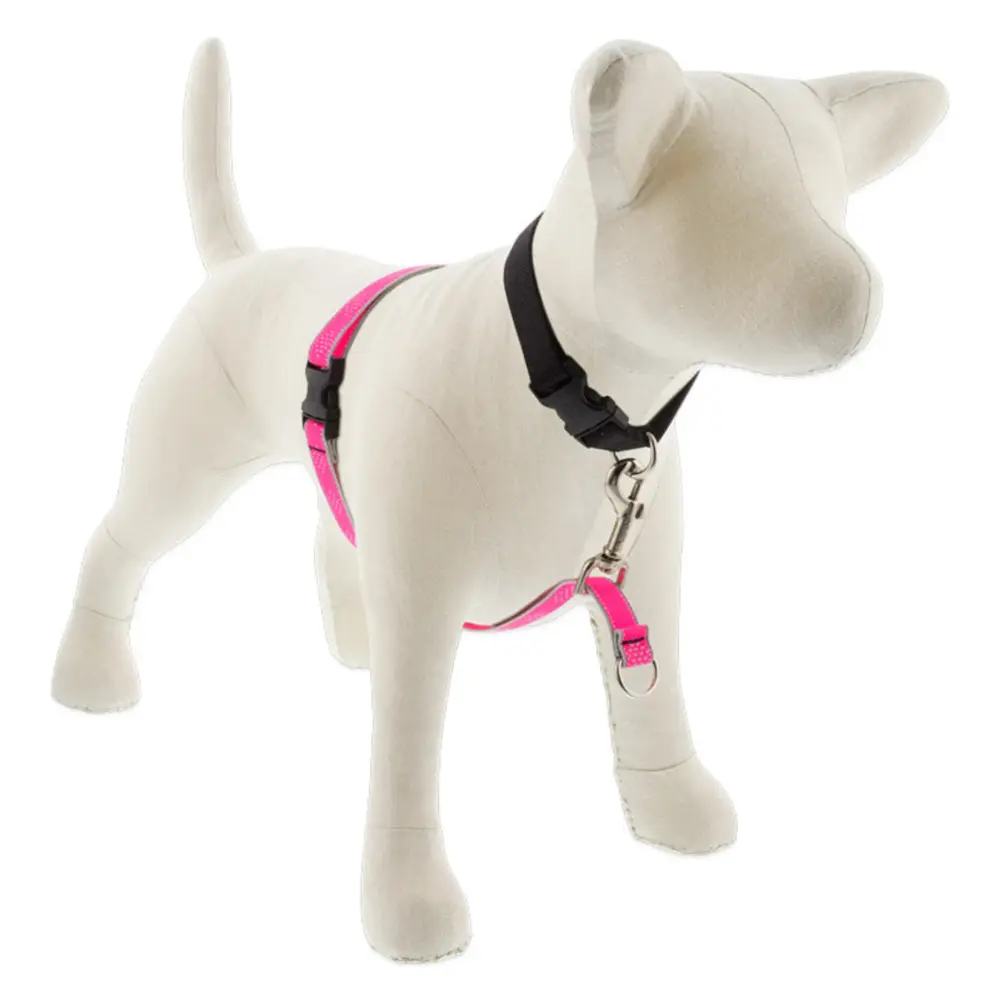
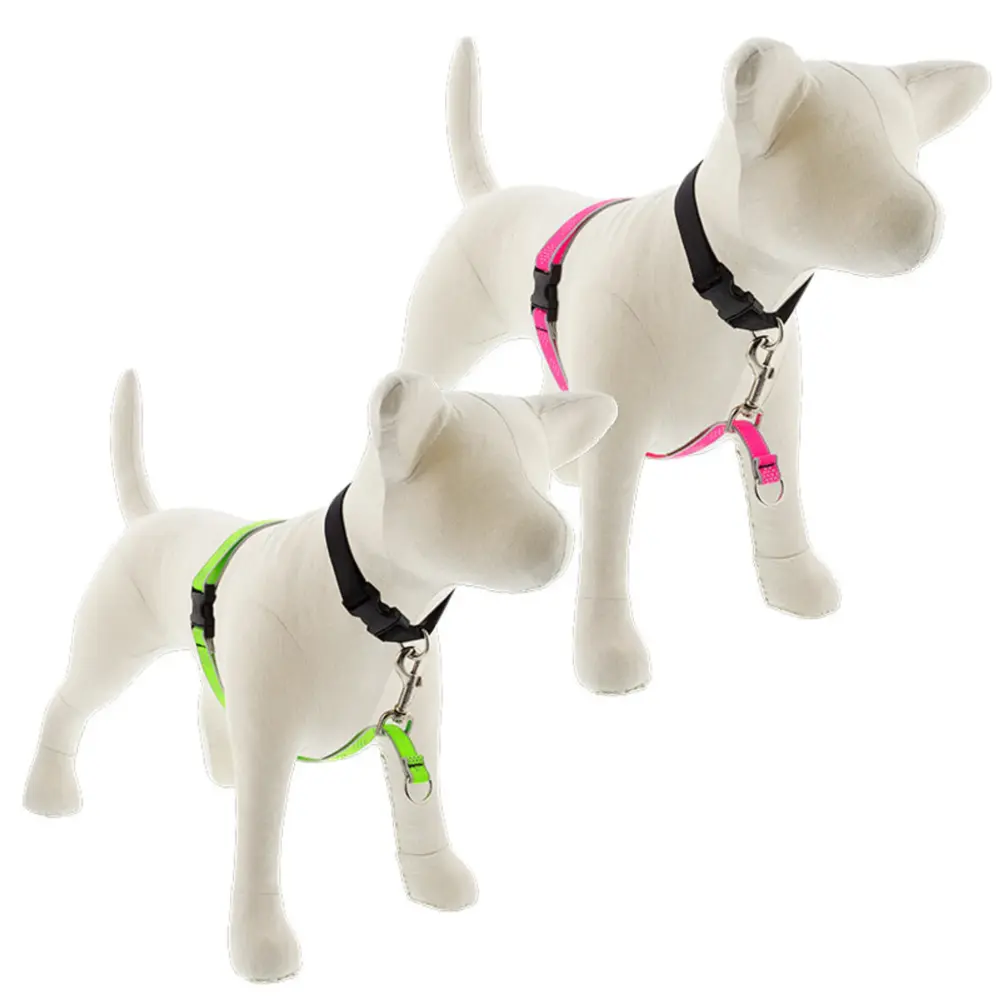
The Lupine Pet Reflective No-Pull Dog Harness has a front attachment that redirects a pulling dog’s forward momentum back toward you without pressure on the throat. It isn’t a standalone harness: it attaches to the everyday collar and leash you already use, and Lupine’s product page notes that it isn’t intended for use with martingale training collars. It is sized for medium and large dogs only, with a 3/4-inch width for a 16–26 inch girth and a 1-inch width for 26–38 inches, comes in six reflective designs and is machine washable (air dry). Measure the chest just behind the front legs first, using our harness measuring guide; a dog under 16 inches or over 38 inches around is outside its range.
If your dog’s current collar is a martingale or worn out, the Lupine Pet Reflective Dog Collar is a flat collar with a D-ring for the leash and ID tags, in 1/2-, 3/4- and 1-inch widths and neck sizes from 6 to 31 inches. A flat collar is also one of the backup attachments VCA suggests if you add a halter later.
-
Lupine Pet
Reflective No-Pull Dog Harness, Choose size & design
Price range: $41.95 through $45.95
Why it fits: A front-clip harness that turns a pulling dog back toward you with nothing on the face. Clips to your dog’s everyday collar; medium and large dogs only, 16 to 38 in girth.
-
Lupine Pet
Reflective Dog Collar, Choose size & design
Price range: $22.95 through $28.95
Why it fits: A flat collar for the no-pull harness to attach to, with a D-ring for leash and ID tags. Neck sizes 6 to 31 in; also a backup attachment if you add a head halter.


For leashes and the rest of our walking gear, browse walking and training.
Head halter FAQ
Are head halters cruel?
Not inherently. A well-fitted halter, introduced slowly, is meant to steer with light pressure and a quick release, not pain. It becomes unkind when the leash is jerked, when it’s used on a long line, or when a dog who stays frightened of it is made to wear it anyway. If your dog still fights the nose loop after a careful introduction, a front-clip harness is the better tool for them.
Will my dog need a head halter forever?
Not necessarily. Once your dog walks on a loose leash most of the time, try a front-clip harness on quiet, familiar routes and keep the halter for busy streets for a while. If pulling creeps back, return to the halter for those walks and go back to practice. When the front clip is enough everywhere, our front-clip vs back-clip guide covers the next step.
Related guides
-
Comparison
Dog Harness vs Collar: Where to Clip the Leash, and When to Use Both
A collar is the place for ID tags; a harness is the better leash point for most dogs. Compare where each puts the pressure, when a collar alone is fine, why toy breeds, flat-faced dogs and puppies do better in a harness, and how to use both together.
-
Comparison
The Best Time to Walk a Dog: Morning, Midday or Evening?
A morning walk suits most dogs: a full bladder, fresh energy and the coolest air of a summer day. Compare morning, midday and evening walks, shift the schedule for summer heat and winter cold, and fit walks around office hours, shifts and working from home.
-
Buying guide
Reflective Gear for Walking a Dog at Night: What Drivers Actually See
Most night-walk kit is bought for the dog, when the person is the harder one to see and the one standing in the road. This covers the difference between reflective and light-emitting gear, how far ahead a driver needs to pick you out, and where reflectivity actually belongs.