Home & Cleaning How-to
Dog Scared of the Vacuum? A Step-by-Step Plan, Plus Quieter Cleaning
Short answer
Pair the vacuum with treats in small steps: off and far away, then running in another room, then moving and closer. Once it’s on, feed only while it runs; if your dog stops eating, barks or hides, go back a step. Meanwhile, vacuum while they’re out, and brush your dog and rake rugs by hand in between.
Why so many dogs fear or chase the vacuum
To a dog, a vacuum is a loud machine that roars to life without warning, lurches around the room and heads for the spot where they’re lying. The AKC’s guide to getting a dog used to the vacuum cleaner adds that it changes how the person pushing it looks, and that it’s rarely paired with anything good: while you vacuum, nobody is paying attention to the dog. Dogs also hear higher-frequency sounds than we do, so a motor’s whine may be harsher to them than it sounds to you.
Many dogs never had a calm introduction as puppies, and one bad moment, such as the vacuum bumping into them, can stick. Some dogs hide; others bark, lunge or bite at the head, and dogs with a strong herding or chase drive may try to round it up. The plan below suits both, with extra management for chasers.
How to tell your dog is uncomfortable
Watch your dog, not the clock. VCA’s introduction to desensitization and counterconditioning lists panting, trembling, trying to escape, barking and becoming excited as signs to end a session right away and make the next one easier. Also back off at a tucked tail, ears pinned back, lip licking, yawning or a low, crouched body, or if your dog turns down a treat they’d normally grab.
What you need before the first session
Keep training separate from cleaning: pick a time when you don’t need the floor done, and gather:
- The vacuum and, ideally, a helper to run it while you handle the treats. You can do the silent steps alone; the noisy ones are far easier with two people.
- Small, high-value treats your dog loves and rarely gets, cut pea-sized so you can feed plenty. Train before a meal rather than just after one.
- A lick mat for the longer runs, spread with a soft food your dog likes and used with you nearby; see what to put on a lick mat for ideas.
- A leash or a baby gate for a dog who chases or bites the vacuum (more on chasers below).
- A way out. Your dog should always be free to move away, so leave doors open and never hold them in place or shut them in a crate near the machine.
Step by step: how to get your dog used to the vacuum
The method pairs desensitization, a very gradual increase in exposure, with counterconditioning, linking the scary thing to something your dog loves. VCA uses the vacuum as its worked example (off and far away, then sound, then movement), and the AKC’s advice follows the same order, pairing the sound with high-value food.
- Park it, switched off, where your dog can see it. Leave the vacuum at the far side of a room for a day or two. Toss a treat whenever your dog looks at it, and scatter a few nearer to it as they relax. Let them sniff it in their own time; never lead or carry them to it.
- Move it while it’s off. Roll it a few feet, slowly and away from your dog, then treat. Work up to pushing it back and forth as you do when cleaning. Movement toward your dog is the hardest version, so save it for last.
- Turn it on far away, briefly. With the vacuum in another room, have your helper switch it on for a few seconds. The moment the motor starts, feed treats one after another; the moment it stops, the treats stop. Repeat a few times, with quiet pauses between.
- Make the runs longer before you make them closer. Stretch the sound from a few seconds to a minute or two. Here the lick mat earns its place: set it down as the motor starts and pick it up as soon as it stops.
- Bring it closer in small steps: the doorway, then the far side of the same room, then a little nearer. Change one thing at a time (distance, length or movement), never two at once.
- Add movement with the motor running. Your helper vacuums slowly across the far side of the room, moving sideways or away, while the treats keep coming. Bring the path closer over several sessions.
- Clean for real, in short bursts. Vacuum one room while your dog is in it, busy with a lick mat or catching tossed treats. Leave a wide margin around their bed.
- Keep the good news coming. Even once your dog seems relaxed, bring out a treat or the lick mat now and then with the vacuum, so the association doesn’t fade.
VCA suggests practicing at least twice a week, daily if you can, in sessions that never become stressful. Keeping them short makes that easier: end while your dog is still relaxed, and move on only after a couple of easy sessions at the current step. Some dogs get through the steps in days; a dog with a long history of fear may need weeks at the early ones.
Tip
Use the treats as your gauge. A dog who keeps eating is coping; one who stops eating, or snatches treats and spits them out, is past what they can handle. Go back to the last easy step and make the next one smaller.
Starting with a puppy
The AKC points to the early socialization period, from about 3 weeks to 3 or 4 months of age, as the ideal time for new sights and sounds, which overlaps with a puppy’s first weeks at home. Run through the same steps quickly and playfully: a game beside the parked vacuum, short runs from another room while your puppy works on a chew, and no surprises.
Mistakes that make vacuum fear worse
- Too much, too soon. Running the vacuum right beside your dog so they get used to it usually backfires: a frightened dog learns the machine is even worse than they thought.
- Scolding the barking or hiding. Punishing a frightened dog adds to the fear, and to a chaser a raised voice can sound like you’re joining in.
- Treats before the noise. If the food comes first, the treat starts to predict the vacuum, not the other way around.
- Teasing with the vacuum. Waving the head at a dog, even as a joke, teaches them to fear it or fight it.
- Invading the safe spot. Vacuuming around a dog who has retreated to their bed or crate tells them nowhere is safe. Clean those spots while your dog is elsewhere.
Troubleshooting: when progress stalls
- Your dog won’t eat, even with the vacuum off. You’re too close, or the treats aren’t special enough. Start farther away, with a better treat, before a meal.
- They were fine yesterday and nervous today. Setbacks happen, especially after a surprise full-volume run. Go back a step or two, then build up again.
- They’re relaxed in one room but not another. Dogs don’t always carry what they learn into a new place, so repeat the later steps in each room you vacuum.
- The fear is spreading to other sounds. Pause the training and talk to your veterinarian.
While you train: where your dog goes when you clean
Floors still need cleaning in the meantime, and every full-volume surprise sets training back. On vacuuming days:
- Clean while your dog is out on a walk with someone else, at daycare or with a friend. It’s the simplest option.
- Or give them a far room and a job. Settle your dog in the room farthest from the cleaning, behind a closed door or gate, with their bed or crate and something to do. A lick mat or chew needs someone nearby, so ask a helper to sit with your dog; if they’ll be alone, scatter a handful of treats or kibble to sniff out instead. White noise, a fan or music, which VCA suggests for dogs who fear noises, can soften the sound.
- Vacuum that room first, before your dog goes in, so you never come back with the machine.
Dogs who chase, bark at or bite the vacuum
Chasing can be fear, excitement or both. A dog who barks from behind the sofa with ears back, then rushes in when the vacuum turns away, is often trying to drive it off; a bouncy dog who play-bows and grabs the head is more likely having fun. Either way, every chase is practice, so stop it happening while you teach something else:
- Manage it first. Keep a chaser on a leash held by a helper, or behind a gate where they can see the vacuum but not reach it.
- Teach a place to be. Reward your dog for lying on a mat across the room, first with the vacuum parked and silent, then through the steps above. A dog settled on a mat can’t also chase.
- Keep the vacuum boring. Push it slowly and steadily, with no sudden sweeps toward your dog.
- Give the chase drive an outlet at other times: fetch, tug or a big ball to push around the yard suit herding dogs and keen chasers.
Safety note
Don’t let a dog mouth a running vacuum. A spinning brush roll can catch fur, ears, lips or paws, and chewing a power cord risks burns and shock. If your dog grabs the machine or the cord, switch it off and unplug it, and keep the cord behind you. A dog who has bitten or snapped at the vacuum, or at the person using it, is one to work on with a trainer.
Robot vacuums and other noisy cleaners
A robot vacuum is usually quieter than an upright, but it starts on its own, wanders into corners and can bump into a dog lying in its path. A dog scared of a robot vacuum needs the same slow start:
- Leave it docked and silent for a few days, with treats scattered near it.
- Run it in another room while your dog works on a lick mat beside you, and watch the first full runs.
- Keep its route clear of your dog’s bed, crate and bowls; some models let you set no-go zones.
- Schedule it for when you’re out together, not while a nervous dog is home alone with it, and never leave a chaser alone with it running.
The same approach applies to a carpet cleaner, steam mop, handheld vacuum or hair dryer. Treat each new machine as a fresh start, even if your dog already takes the vacuum in stride.
Quieter ways to vacuum less
The fewer times the vacuum comes out, the fewer chances for a bad moment while you train.
Brush out loose hair before it lands
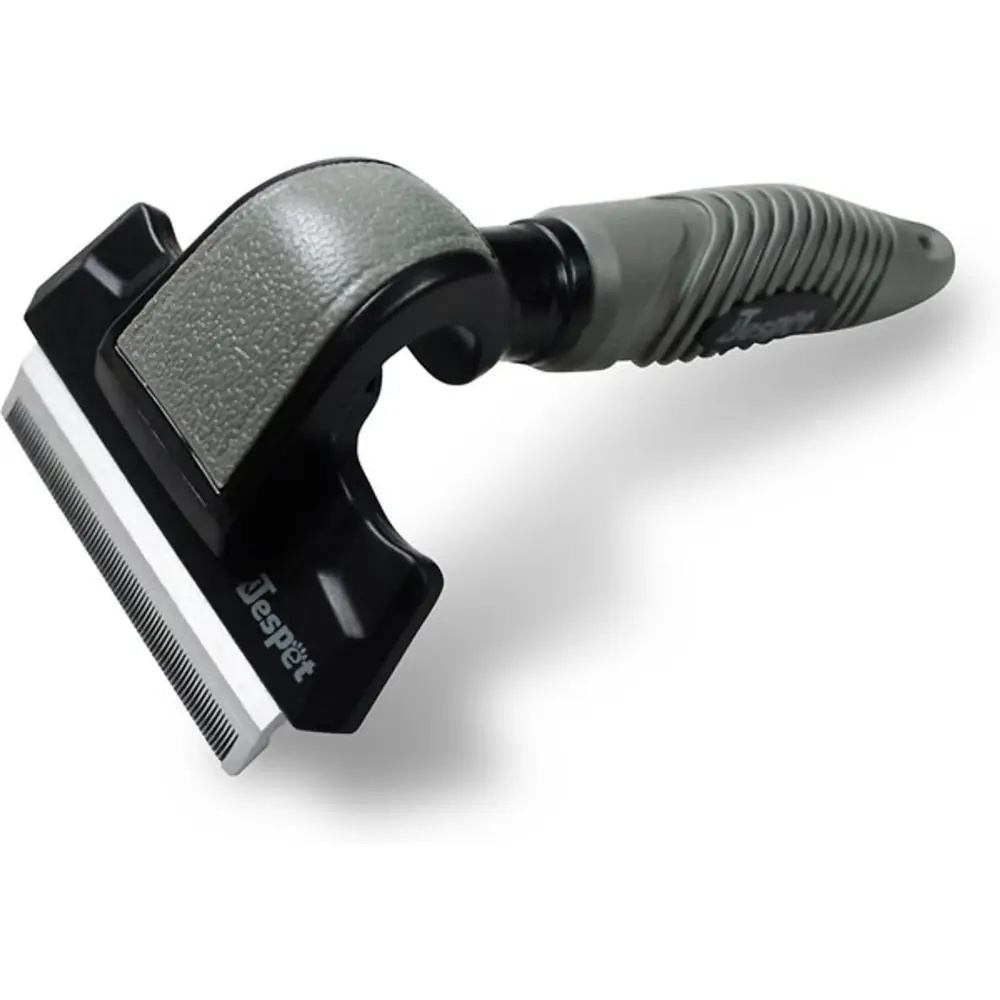
Hair you brush out never reaches the floor. For a double-coated dog, a de-shedding tool such as the JESPET De-Shedding Tool lifts loose undercoat out through the topcoat; in shedding season, two or three short sessions a week is plenty. Brush outdoors or on an easy-to-sweep floor, as our guide to brushing your dog without getting hair everywhere explains, and see dog shedding season for the spring and fall peaks.
Rake the carpet between vacuum days
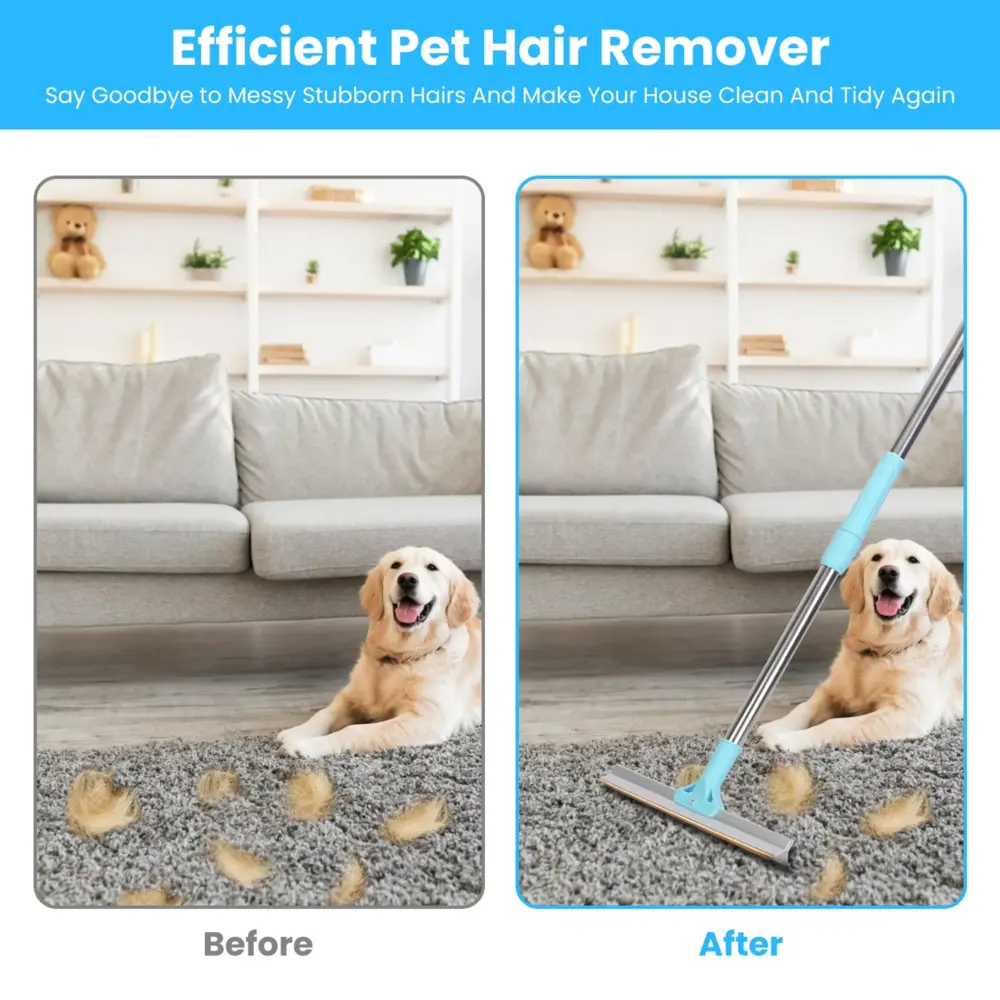
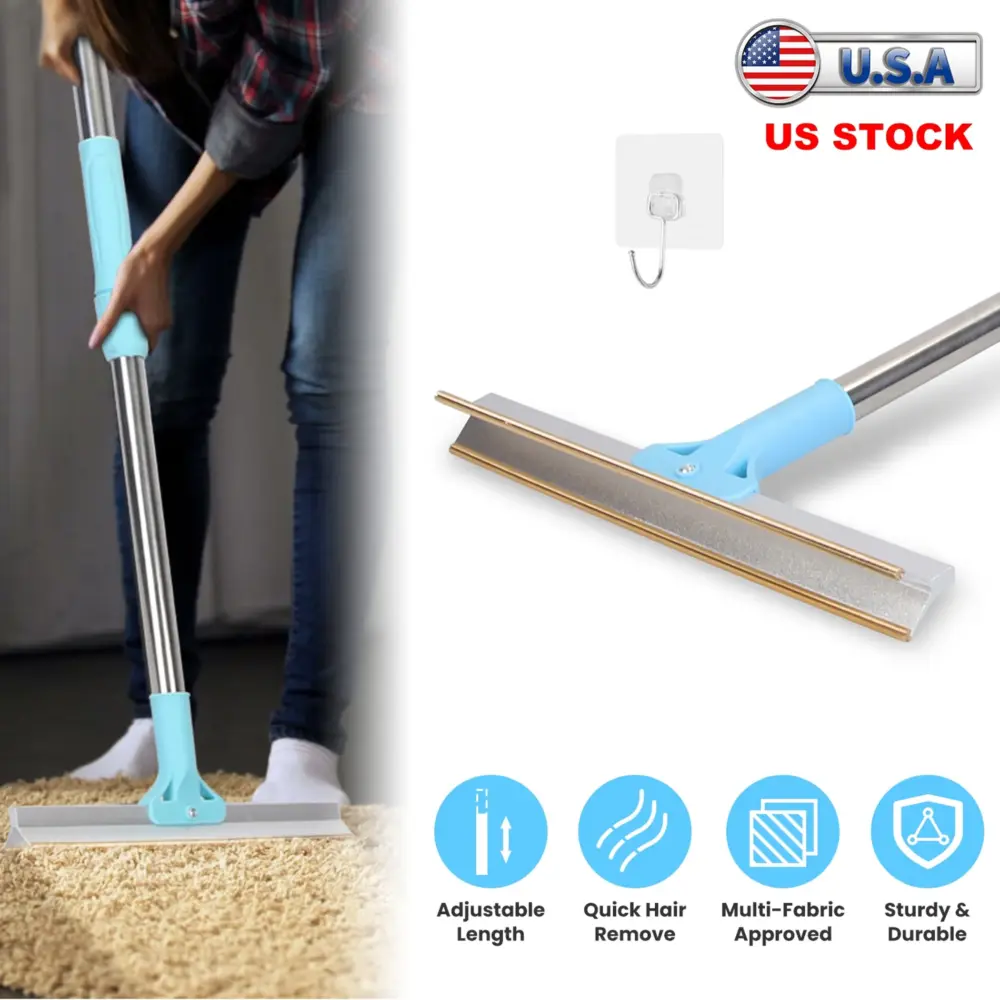
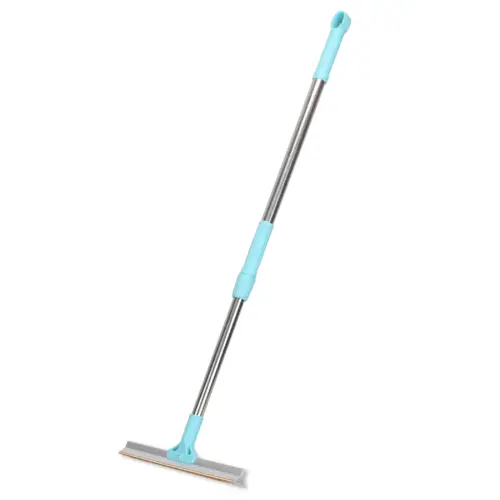
A rubber rake has no motor, so there’s no noise for your dog to get used to, only movement. Our Telescopic Pet Hair Removal Rake pulls embedded hair, dust and lint up out of carpets, rugs and stairs, and you work standing up. It won’t replace the vacuum for grit and crumbs, but raking the busiest rugs in between can stretch the gap between vacuum runs, which you can then time for when your dog is out. Our guide to getting dog hair out of carpet covers the technique, and getting dog hair off a couch handles upholstery. On hard floors, a microfiber dust mop does the same quiet job. Introduce any new tool calmly, since a dog who chases the vacuum may also go after a moving rake or mop.
-
SodaPup
Jigsaw Enrichment Lick Mat for Dogs & Cats, Choose color
$25.95
Why it fits: A slow, steady reward for the noisy steps: fill the jigsaw grooves ahead of time, set it down as the motor starts and lift it when it stops. If your dog quits licking, slow down.
-
Telescopic Pet Hair Removal Rake for Carpets, Rugs & Car Seats, View product
$46.95
Why it fits: Quiet carpet care between vacuum days: no motor to startle your dog, just firm rubber teeth that lift embedded hair from rugs and stairs on a telescopic handle.
-
JESPET
De-Shedding Tool for Dogs & Cats, Choose size
Price range: $27.95 through $29.95
Why it fits: A stainless-steel edge pulls loose undercoat from a double coat at brushing time, so less of it lands on the floor waiting for the vacuum. In Small and Large.


For a whole-house routine built around a dog, see how to keep a house clean with a dog, or browse our pet hair removal tools.
When to call a trainer or your veterinarian
Get help from a certified trainer who uses reward-based methods if your dog bites or snaps at the vacuum or at people near it, panics (drooling, trembling, scrambling at doors to escape), or makes no progress after a few weeks of regular practice.
See your veterinarian first if the fear is new or getting worse, especially in an older dog. VCA’s guide to fear of noises in dogs advises that dogs 8 years or older who develop a fear of noises be examined, since pain from ear infections or arthritis, and age-related hearing loss, can play a part. For a dog whose fear is severe or spreading, your veterinarian can refer you to a veterinary behaviorist and may suggest medication alongside the training.
Vacuum fear FAQ
Should I comfort my dog when the vacuum scares them?
Yes, calmly. VCA’s advice on noise fears says gentle petting and staying close are fine as long as you’re relaxed yourself. What doesn’t help is anxious fussing, holding a dog in place, or pulling them toward the vacuum to show it’s harmless.
Is it okay to keep my dog in another room every time I vacuum?
Yes. If your dog is content in a far room while you clean, that’s a perfectly good long-term answer. Training matters most for dogs who panic even from another room, who chase or bite, or who live where the vacuum runs daily. Even then, the realistic goal is a dog who rests while it runs and recovers quickly afterward, not one who never notices it.
Related guides
-
How-to
How to Brush Your Dog Without Getting Hair Everywhere
Hair all over the room after every brushing? Groom outdoors or over an old sheet on a hard floor, mist the coat lightly and empty the brush every few strokes. Here's where and when to brush, and a five-minute cleanup for the hair that escapes.
-
Checklist
Staying With Family or Friends With a Dog: A Houseguest Checklist
A houseguest checklist for a few days at your parents’ or friends’ home with your dog: the questions to ask first, what to pack, meeting a resident dog or cat, a hazard check, a quiet room and routine, and the cleanup before you leave.
-
Checklist
How to Protect an Apartment From Pet Damage: A Renter’s Checklist
A renter’s checklist for living with a dog or cat: photos and lease questions at move-in, prevention for carpet, doors, floors and odor while you live there, and a room-by-room deep clean before you hand back the keys.