Beds & Comfort Guide
Do Calming Dog Beds Work? What a Raised Rim Can and Can’t Do
Short answer
Partly. A “calming” bed is a round bed with a raised rim and deep, soft fill, a shape that can help a dog who sleeps curled up settle by giving them something to lean on. It rarely suits sprawlers or hot sleepers, and no bed treats anxiety: panic when left alone, noise fear or new restlessness calls for your veterinarian.
What makes a dog bed “calming”
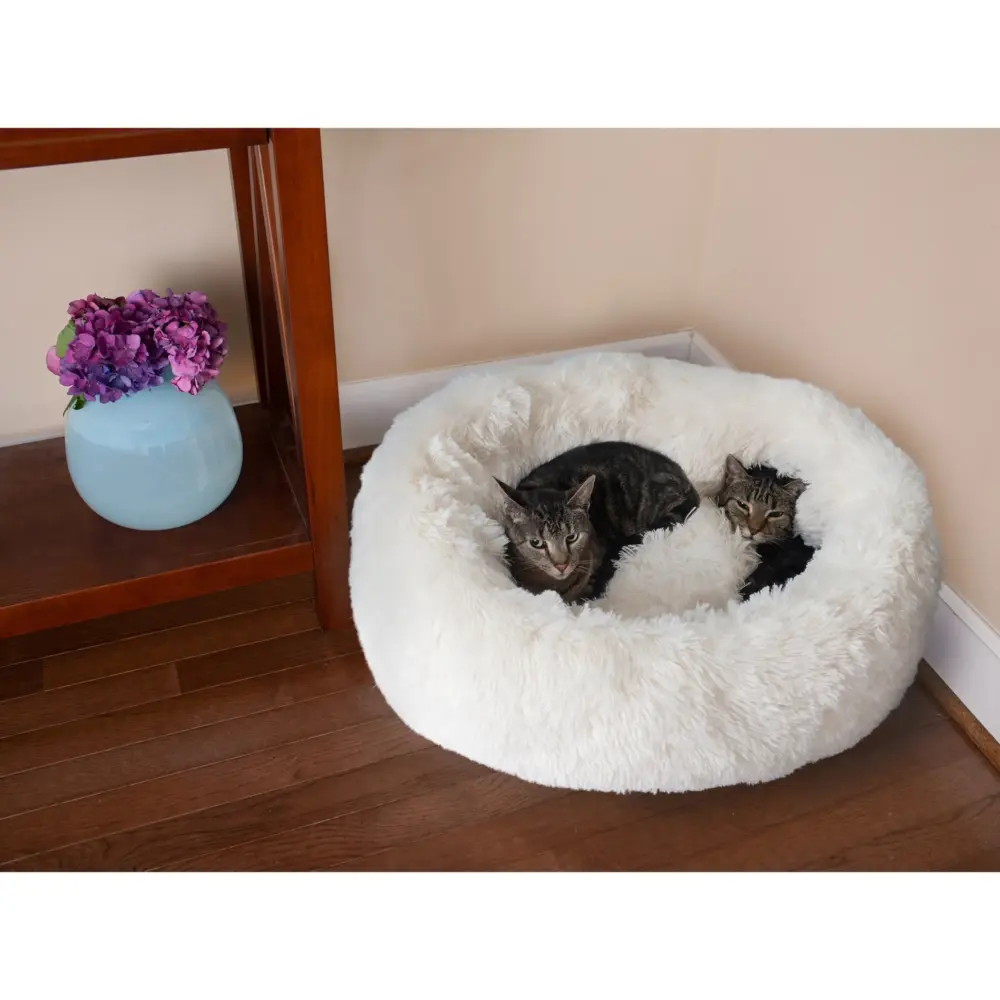
“Calming” and “anti-anxiety” aren’t medical terms when they appear on a dog bed. They describe a style: usually a round or oval bed with a stuffed rim all the way round, a deep, squashy middle and a fluffy cover. Some dogs clearly sleep well in one, but that comes down to comfort and shape rather than anything that treats nerves, and there is little published research testing whether these beds reduce anxiety at all. Each of the three features does something real, and each has a catch.
The raised rim, or bolster
A stuffed edge runs all the way round, so the bed looks like a donut. A curled-up dog can press their back against it and rest their chin on the far side, much as many dogs pick a couch corner or lean on your leg. The catch: the rim takes up room, so the flat sleeping area inside is smaller than the outside measurement, and a tall rim is a step up for short or stiff legs.
Deep, soft fill
Plump, loose fill lets a dog sink in until the bed wraps around them, a feeling many small, light dogs seem to enjoy. Heavier dogs tend to press it flat and end up lying on little more than the base, and an older dog can find a soft, sinking surface hard to stand up from.
Long, fluffy plush
Shaggy faux-fur covers feel soft and hold body warmth, which is welcome in a cool room in winter. The same warmth sends a dog who runs hot back to the tile. Plush also collects hair and drool, so it needs washing more often than a smooth cover.
Claims that a fluffy cover mimics a littermate or a mother dog’s coat describe a feel, not a measured effect. Judge the bed on its shape and fabric, and on whether those suit the way your dog sleeps.
Which dogs a bolster bed suits
Whether a calming bed is worth it depends on how your dog sleeps. Spend a few days watching them when nobody is steering them, on the couch, on your bed or on the floor, then find them in the table.
| Sleep style | Will a rimmed bed help? | Better match |
|---|---|---|
| Curler | Often: the rim is a chin rest | A round bed with a rim |
| Leaner | Often: the rim is a backrest | A round bed with a rim |
| Burrower | Sometimes, with a blanket inside | A rimmed bed plus a soft throw |
| Sprawler | Rarely: legs hang over the rim | A flat, rectangular bed |
| Hot sleeper | Rarely: plush holds warmth | A cool surface to lie on |
| Chewer | No: plush and fill invite chewing | Bedding with nothing to pull out |
| Stiff senior | Sometimes: hard to rise from deep fill | A firm bed with a low edge |
| Anxious dog | Not on its own | Your veterinarian first |
Dogs it tends to suit
- Curlers and leaners. Dogs that sleep in a tight ball, nose tucked toward the tail, or that wedge into a couch corner or sleep with their back against a wall or against you. The rim gives them a chin rest and a backrest in a bed of their own.
- Small burrowers. Many small dogs dig under blankets or into cushions. A rimmed bed is open on top, so add a soft blanket they can nose under rather than expecting the rim alone to feel like a den.
- Dogs in cool rooms. Plush and a rim hold body warmth, which helps a small or short-coated dog on cold nights. Our guide to keeping a dog warm at night indoors covers drafts, cold floors and blankets.
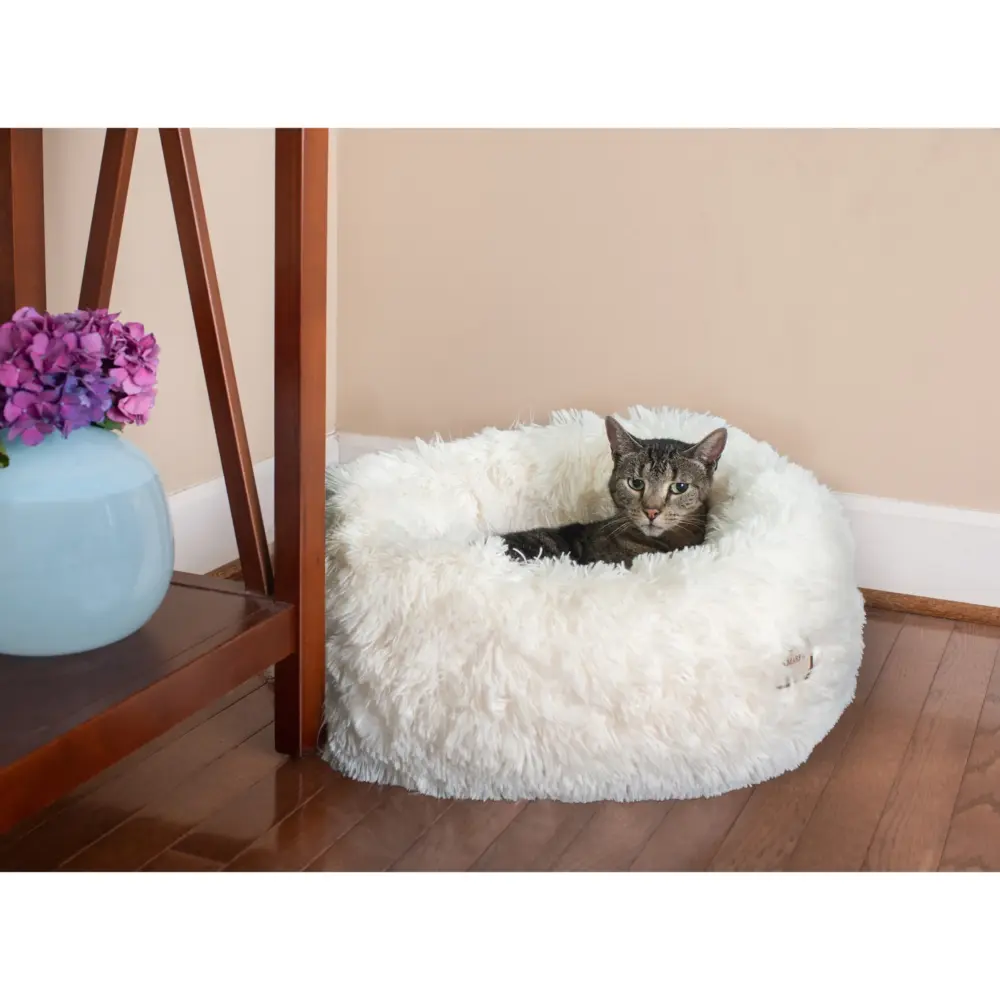
Many cats sleep the same way, and plenty of bolster beds, ours included, are sold for both. If the bed is really for your cat, see how to choose a cat bed your cat will use.
Dogs better off without one
- Sprawlers. Dogs that sleep flat on their side or belly-up, legs stretched out, need length rather than walls. In a round bed they end up with legs over the rim or half on the floor, so a flat, rectangular bed or mat suits them better.
- Hot sleepers. A dog who pants at night, moves to the tile or sleeps belly-up is shedding heat, and plush plus a rim holds it in. Offer a cool surface instead of the plush bed, or beside it: the Chillz cooling gel mat cools under pressure with no water, ice or electricity.
- Chewers and shredders. Long plush and loose fill tempt a dog who chews bedding, especially a puppy or a bored dog left alone. Circling and scratching before lying down is different and usually normal; see why dogs dig in their beds for where the line falls.
- Stiff, sore or heavy dogs. A tall rim and a soft, sinking middle make lying down and getting up harder. A firmer, flatter bed with a low edge to step over is usually easier, and new stiffness is worth a visit to your veterinarian.
Safety note
If your dog tears open a bed, take it away and pick up the filling. Swallowed fabric or stuffing can cause a blockage, and VCA Animal Hospitals lists vomiting, diarrhea, belly pain, a poor appetite, straining and lethargy among the signs of a swallowed foreign body. Call your veterinarian right away if you think your dog ate some, even if they seem fine.
What a bed can’t fix, and when to see your veterinarian
A comfortable bed can be part of a calm home, but it can’t change how a dog feels about being alone, loud noises or pain. In these cases, buying a bed first only delays the help your dog needs.
Distress when left alone
The ASPCA’s guide to separation anxiety in dogs lists signs such as house soiling, persistent barking or howling, chewing or digging at doors and windows, escape attempts and pacing when the dog is left alone. A softer bed won’t change any of that. The ASPCA advises seeing your veterinarian first to rule out medical problems, and recommends a certified applied animal behaviorist or a board-certified veterinary behaviorist to guide the behavior work; your veterinarian can also talk through whether medication may help.
Fear of storms and fireworks
A bed can anchor a quiet den on a stormy evening or a fireworks night, but it doesn’t make the noise any less frightening. Our plan for keeping a dog calm during fireworks covers the den, the timing and what helps while the noise lasts. A dog who trembles, hides or tries to escape every time needs a conversation with your veterinarian.
Restless nights
A dog who paces, circles for a long time or can’t get comfortable may be sore rather than unsettled. Cornell University College of Veterinary Medicine includes pacing or an inability to settle, trouble getting comfortable to sleep, difficulty getting up from rest and heavy panting at rest among the signs of pain in dogs. That is a reason to see your veterinarian, especially in an older dog or when the change is sudden.
Tip
A simple rule: if you’re buying a bed to solve a change in behavior, call your veterinarian first and buy the bed second.
How to choose a round bolster bed
- Size inside the rim. Measure your dog curled up asleep, across the widest point, and add a couple of inches. Compare that with the sleeping area inside the rim, since the listed size of a round bed usually includes the rim. Our guide to measuring a dog for a bed walks through it.
- Rim height. A taller rim gives more to lean on but is a bigger step in. For a short-legged or older dog, check how high the edge sits.
- Base. On hard floors, a skid-free base keeps the bed from sliding when your dog steps in or turns around, and a water-resistant one helps keep spills and damp paws from soaking through to the floor.
- Washing. Plush gathers hair, drool and grime. Check whether the bed can go in the machine or should be washed by hand, and whether it fits your washer. Let it dry completely before your dog uses it again, and check the seams and rim for holes each time.
- Warmth. Plush runs warm. For a dog who overheats easily, keep a cool spot within reach or save the bolster bed for the colder months.
Our bolster bed, for cats and small dogs only
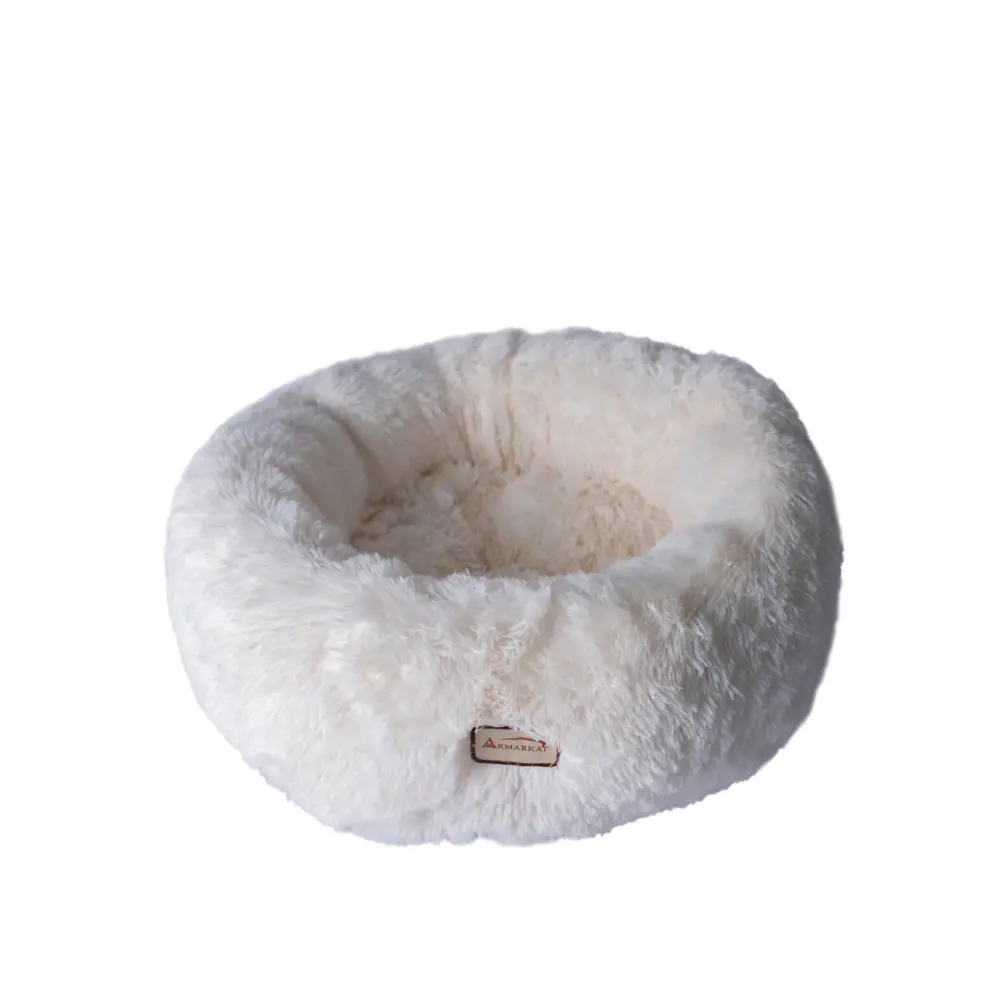
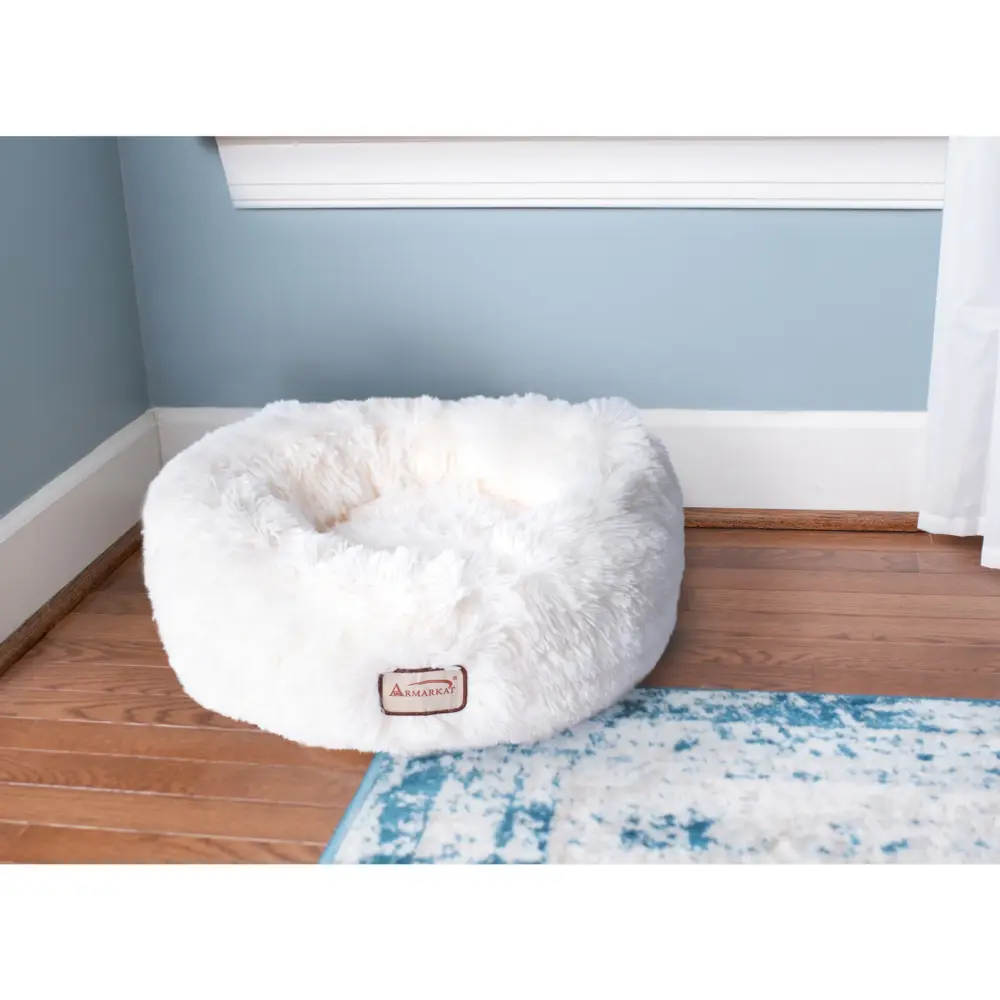
We don’t sell beds for medium or large dogs, and the picks below are limited to what Nilosi stocks. If your dog is small and sleeps curled up, the Armarkat Ultra-Plush Cuddler Bed is the bolster style described above: a round bed in thick, soft plush with a raised rim all the way round to rest a head on, and a water-resistant, skid-free base that keeps it where you put it.
It comes in two sizes. The Small measures 22 × 22 × 8 in, and like any rimmed bed, its sleeping area is smaller than that outside size. The Medium is larger, but its dimensions aren’t in our listing, so contact us with your dog’s curled-up measurement and we’ll confirm the fit before you order. It’s machine washable on a gentle cycle, though hand washing keeps the plush at its best. We sell it as a comfortable bed for curlers, not as a treatment for anxiety.
If the sections above describe a warm sprawler rather than a curler, the cooling mat is the better match. It isn’t a bolster bed, just a cool surface for the floor, a crate or the top of an existing bed.
-
Armarkat
Ultra-Plush Cuddler Bed for Cats & Small Dogs, Choose size
Price range: $55.95 through $72.95
Why it fits: A rimmed bed for small dogs and cats that sleep curled up; the rim runs all the way round and the base is skid-free. Small is 22 × 22 × 8 in.
-
The Green Pet Shop
Chillz Cooling Gel Mat for Dogs & Cats, View product
$45.95
Why it fits: The cool option for a warm sprawler who leaves plush beds; it cools under pressure with no water, ice or power. Sold in one size, Medium.


Browse the rest of our beds and comfort range for cats and small dogs.
Giving a new bed a fair trial
A new bed smells of packaging and sits somewhere unfamiliar, so a cool first reception doesn’t mean it’s the wrong shape. Give it a week or two. Our guide to getting a dog to sleep in their own bed covers where to put it and how to teach a “bed” cue; for judging the shape, four things matter most.
- Put the bed where your dog already naps, with their old blanket or a T-shirt you’ve worn on top.
- When your dog is calm, toss a treat onto it, and quietly praise them whenever they lie down in it on their own.
- Let them circle and dig before settling, and don’t hold them in the bed or keep carrying them back to it.
- After a week or two, notice where your dog naps when you aren’t guiding them. That is your answer.
A dog who curls up in it unprompted with their chin on the rim has found a good match. If your dog lies half out, leaves it for the floor, pants in it or struggles to climb out, the shape or the warmth is probably wrong, not the dog. Try a flat bed or a cool surface instead, and keep the bolster bed for winter or for a cat who will gladly take it over.
Calming dog bed FAQ
Are calming beds a good idea for puppies?
For supervised naps, often yes. Many puppies chew bedding, though, so for nights and time alone, use bedding you can check and replace easily until the chewing phase passes, and take away anything torn.
Do calming beds work for large dogs?
The shape works the same way for a large dog who sleeps curled up, as long as the space inside the rim is big enough. Many large dogs sprawl, though, and are happier on a flat bed. Our only bolster bed is sized for cats and small dogs, so measure carefully if you shop elsewhere.
Is a calming bed the same as an orthopedic bed?
No. A calming bed is built around softness and a rim, while an orthopedic bed is usually built around a firmer, supportive base for stiff or older dogs. If your dog has joint pain, ask your veterinarian which kind of support suits them.
Can a bolster bed go in a crate?
Yes, if it lies flat on the crate floor without bunching against the sides and your dog can still stand up and turn around. A round bed leaves the corners of a square crate bare, so a flat pad sized to the crate floor often fits better, and a dog who chews bedding shouldn’t be crated alone with plush.
Related guides
-
Guide
Why Do Dogs Dig in Their Beds? Normal Nesting and When It’s a Problem
Digging, scratching and circling before lying down is normal nesting. Learn why dogs do it, how to tell a normal routine from a frantic one, what extra digging says about the bed, how to handle a bed shredder and when to call your veterinarian.
-
Checklist
When to Replace a Dog Bed: 7 Signs, Plus Cat Beds and Gel Mats
A checklist for deciding when a dog or cat bed is past saving: the fold-and-press test for flat filling, smells that return after a proper wash, tears that put a chewer at risk, worn bases, rims and gel mats, a pet who has outgrown the bed, and what only needs a wash.
-
Checklist
What to Put in a Dog Crate: Bedding, Water, Toys and What to Leave Out
A checklist for the inside of a dog crate: water that won’t tip, bedding once your dog stops soiling or shredding it, a cool layer for hot sleepers, which chews and toys need you watching, a cover for den lovers, what to leave out, and how to adjust for puppies, chewers and seniors.