Journal Guide
Things People Do That Dogs Quietly Dislike
Short answer
Dogs tolerate hugs, head pats, face holding, head-on greetings and rushed walks more than they enjoy them. The test is simple: stop, and see whether your dog asks for more. If they move away, sniff the floor or settle elsewhere, they were putting up with it.
Tolerating is not enjoying
Dogs are extremely accommodating, which is the root of the problem. A dog who does not move away is often read as a dog who is happy, when they may simply have learned that moving away does not work.
There is a reliable test, usually called the consent test. Do the thing for three seconds, then stop and take your hands away. A dog who enjoyed it will move back into you, nudge your hand or lean in. A dog who did not will look away, move off, shake, or stay exactly where they are without re-engaging. It takes five seconds and it is more honest than any amount of guessing.
Hugs and face holding
Hugging is a primate signal. To a dog it is restraint, and restraint by someone they cannot easily move away from. Most dogs accept it from their own people, many look distinctly uncomfortable in photographs of it, and a reasonable number of bites to children happen during one.
The same goes for holding a dog’s face, kissing the muzzle and leaning over the head. None of these are catastrophic with a dog who knows you well, and all of them are worth avoiding with a dog who does not.
Safety note
Teach children that dogs are stroked on the chest or shoulder, never hugged, and never approached while eating, chewing or asleep. Supervise rather than trusting either party to manage it.
Greeting a dog head on
The standard human greeting is to walk straight at the dog, lean over, make eye contact and reach for the top of the head. Every part of that reads as pressure in dog terms.
- Stop a few steps away and stand side on rather than facing the dog.
- Avoid direct eye contact; look past them.
- Let the dog approach you, if they want to.
- Stroke the chest, shoulder or side of the neck, not the top of the head.
- Stop after a few seconds and let them decide whether to stay.
This matters most with unfamiliar dogs, and it is also the fastest way to make a nervous dog decide you are acceptable.
Cutting walks short on sniffs
A walk where the dog is pulled off every interesting smell is exercise for you and frustration for them. Sniffing is the main reason dogs want to go out, and a slow walk that covers half the distance usually produces a calmer dog than a brisk one. Our guide on what dogs actually enjoy goes into why.
If you are short on time, choose a shorter route and let the sniffing happen rather than a long route at a fast pace. On safe ground, more lead length helps enormously: how to use a long line covers doing it safely.
Handling paws, ears and nails with no plan
Nail trims, ear cleaning and towel drying are jobs where most dogs are simply held still and got through. Done that way they get harder every time, because each session teaches the dog that handling means being trapped.
- Touch the area, release, give a treat. Repeat over days before attempting the job.
- Let the dog move away at any point without being held in place.
- Do one nail, not ten, and stop while it is still going well.
- Pair the tool with food before it ever touches the dog.
- If a dog is already frightened of the job, start further back than you think you need to.
Our guide on what to do when a dog does not like their paws touched has the full build-up, and the same approach works for ears, brushes and towels.
Loud homes with no escape route
An open-plan house with no closed doors and no quiet corner gives a dog nowhere to go when the room gets busy. Dogs cope with noise and visitors far better when leaving is an option.
The fix is one bed in a low-traffic spot that nobody disturbs: not the hallway, not next to the bin, not in the middle of the kitchen. Children and guests should be told it is out of bounds. A dog who has a reliable retreat uses it before they get to the point of growling.
Jobs dogs tolerate because they have no choice
Some things have to happen whether the dog votes for them or not: nail trims, vet examinations, towel drying, harnesses in the rain, baths after something unspeakable in the park. The point is not to avoid them but to stop treating them as something done to an unwilling dog.
- Give notice. A consistent cue before handling, such as a word or showing the brush, means the dog is never ambushed.
- Pay well. Pair the job with something genuinely good, every time, not just when it goes badly.
- Keep it short. Two nails today beats ten nails and a dog who hides next week.
- Allow an exit. Work on the floor rather than a table where you can, and do not hold a dog in place to finish.
- Watch for the early signals covered in how to read dog body language, and stop at the first one rather than the third.
Dogs who have been taught that handling is predictable and brief are dramatically easier at the vet, and that is worth more over a lifetime than any single training exercise.
Noise, and being startled
Vacuum cleaners, hairdryers, smoke alarms, fireworks and building work are all louder and higher pitched to a dog than to you. Many dogs learn to cope; a fair number never do, and the ones who do not tend to get worse with repeated exposure rather than better.
The useful habit is to warn rather than surprise. Put the dog in another room before the vacuum comes out, rather than vacuuming around them. Tell them you are about to pick them up or move them instead of doing it mid-nap. Dogs handle predictable far better than sudden, and a dog who is startled awake repeatedly stops resting properly.
When dislike becomes a problem
Most of this page is about comfort rather than safety. It stops being a preference and starts being a problem when a dog begins to avoid you, flinches at a raised hand, stiffens when approached in their bed, or growls at handling they used to accept.
A change of that kind usually means one of two things: the handling has become genuinely unpleasant, or something hurts. Both are worth acting on quickly, and the second one needs a vet rather than a training plan.
Small changes with big returns
- Stroke the chest, not the head
- Do the three-second consent test when you are not sure
- Let the dog end an interaction without consequence
- Give walks time rather than distance
- Build up to handling instead of restraining
- Protect sleep: do not wake a sleeping dog for a cuddle
- Keep one quiet bed genuinely off limits to everyone else
- Skip the costume, keep the coat if the weather needs one
The one-minute consent test
Everything on this page reduces to one habit, and it takes seconds. Interact for about three seconds, then stop completely and take your hands away. What the dog does next is the answer.
| What the dog does | What it means |
|---|---|
| Moves back into your hand | Yes, continue |
| Nudges or paws at you | Yes, continue |
| Stays still, no re-engagement | Was tolerating it |
| Turns the head away | No |
| Moves off, sniffs, shakes | No, clearly |
| Freezes or stiffens | Stop, give space |
Do it for stroking, for hugging, for grooming and for anything your dog merely puts up with. It costs nothing, it takes three seconds, and it replaces guessing with information.
Why none of this is about spoiling a dog
There is an old idea that respecting a dog’s preferences produces a spoiled or disobedient animal. It does not. Dogs who are given some control over handling and social contact are easier to live with, not harder, because they have no need to escalate to make themselves understood.
None of this conflicts with training, rules or boundaries. A dog can have a reliable recall, settle on cue and wait at the door while also being allowed to end a cuddle. The two things operate in different areas entirely.
Common questions
Does my dog really hate being hugged?
Most dogs tolerate it from their own people rather than enjoying it. A few genuinely like it. Use the three-second test: hug briefly, let go, and see whether your dog leans back in or moves away.
Is it wrong to pat a dog on the head?
It is not harmful, it is just rarely the favourite. A hand coming down over the head is slightly threatening in dog terms, and the chest, shoulder and side of the neck are more welcome in nearly every dog.
My dog never complains about any of this. Is it fine?
Possibly, and it is worth testing rather than assuming. Dogs who have learned that objecting achieves nothing stop objecting. The consent test takes seconds and gives you a real answer.
How do I stop visitors doing all of this?
Give them a job instead of an instruction. Ask them to ignore the dog for the first few minutes and hand them a few treats to drop on the floor. That removes the greeting pressure entirely and most dogs relax within minutes.
Is it unfair to put clothes on a dog?
A coat for genuine cold or rain is a practical item, and many dogs need one. A costume for a photograph is for you. The test is whether the garment does a job, and whether your dog moves normally in it.
-
Guardian Gear
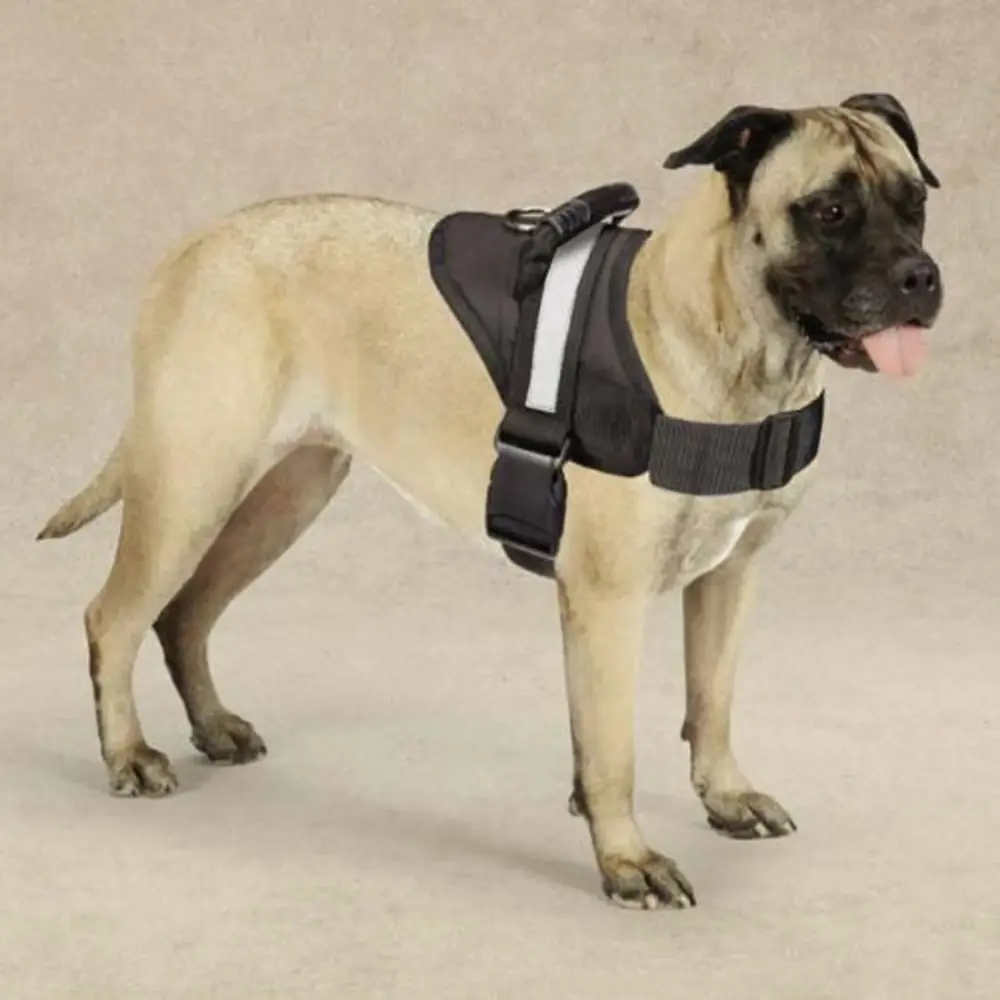
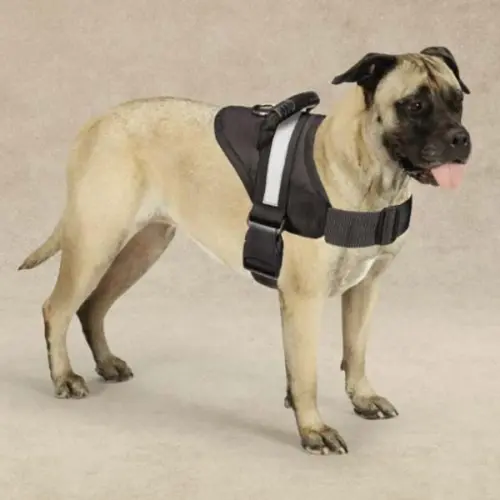
Excursion Dog Harness, Choose size
Price range: $35.95 through $48.95
Why it fits: A handle on the back gives you control without grabbing a collar, which is the handling most dogs object to.
-
Sakabase
Curved Slicker Brush, View product
$39.95
Why it fits: A curved brush covers more coat per stroke; shorter grooming sessions are easier on a dog who dislikes being handled.

If the signals you are seeing look stronger than mild dislike, read how to read dog body language and signs your dog is stressed, and build the handling jobs into the routine covered in the weekly at-home health check.
Related guides
-
How-to
The Weekly At-Home Health Check for Dogs
Five minutes a week, done in the same order, catches most problems while they are still small. This guide walks through a nose-to-tail check for dogs, what normal feels like, and the findings worth a phone call.
-
Checklist
A Realistic Daily Dog Care Routine
A workable daily routine for a dog, split into morning, daytime and evening, with the weekly jobs that are easy to forget and an honest note on what you can skip when the day gets away from you.
-
Checklist
A Preventive Care Calendar for Dogs and Cats
Preventive care is mostly a scheduling problem. This calendar lays out the daily, weekly, monthly and annual jobs for dogs and cats, says which ones belong to a vet, and adjusts for puppies, kittens and senior pets.