Journal Guide
How to Read Dog Body Language: Ears, Tail, Eyes and the Whole Picture
Short answer
Dogs signal with the whole body, not the tail alone. Read the body shape, ears, eyes and mouth together, then look at what the dog is moving toward or away from. A wagging tail on a stiff body is not an invitation, and a dog who turns away is asking for room.

Why body language beats guessing
Dogs communicate constantly and almost all of it is physical. Growling and snapping sit at the loud end of that range, and by the time a dog uses them they have usually been asking quietly for a while. Learning the quiet end is what prevents the loud end.
The other reason to learn it: most of what people call bad behaviour is a dog saying no in the only way available to them. A dog who will not settle, who shoves a toy at you, who backs off the lead at the door, is giving you information. Reading it changes what you do next.
Start with the whole dog
Single signals mean very little. A tail wag means the dog is aroused, not that they are friendly. Panting means hot, or excited, or stressed. The meaning comes from combining parts, so scan in this order before you interpret anything:
- Overall shape: loose and curved, or stiff and straight?
- Weight: forward, centred, or shifted back?
- Height: standing tall, normal, or crouched and small?
- Direction: moving toward something, away, or frozen?
- Speed: fluid and bouncy, or tight and deliberate?
Then read the details. A dog whose whole body is loose and wiggly is telling you something very different from a dog who is still, tall and pointed at something, even if both tails are moving.
Tail height, speed and stiffness
The tail is an arousal meter more than a mood ring. Height says how confident or aroused the dog feels, speed says how intense it is, and stiffness says whether the dog is relaxed about it.
| Tail | Usually means |
|---|---|
| Loose, mid-height, broad sweep | Relaxed and sociable |
| High and stiff, fast small wag | Highly aroused, could tip either way |
| Level and straight, not moving | Focused; assessing something |
| Low, slow wag | Uncertain or appeasing |
| Tucked under the body | Frightened; wants to leave |
| Helicopter circles | Genuine excitement, usually greeting |
Tip
Tail carriage varies by breed. A pug and a greyhound at rest hold their tails completely differently, so learn your own dog’s neutral first and read changes from there.
Ears, eyes and mouth
The face carries the fastest changes, which makes it the most useful area once you know what to look at.
- Ears forward: interested, focused on something ahead.
- Ears flat or pinned back: worried, or appeasing someone.
- Soft, blinking eyes: comfortable.
- Hard stare: a warning; the dog is not relaxed.
- Whale eye, meaning the whites showing in a crescent as the dog turns the head but not the eyes: stop what you are doing.
- Loose open mouth, often with a curved tongue: relaxed.
- Closed, tight mouth with tension at the corners: stressed or focused.
Posture and weight
Weight tells you intention better than almost anything else. A dog whose weight is forward is considering acting on something. A dog whose weight is back is considering leaving.
- Play bow, chest down and rear up: an invitation, and a reset signal mid-game.
- Tall and forward, on the toes: confident arousal; read the rest of the body carefully.
- Crouched, low and small: frightened or strongly appeasing.
- Frozen: the most under-read signal on this page. A still dog is not a calm dog.
- Rolling onto the back: an invitation to rub in a loose dog, and appeasement in a tense one. The rest of the body tells you which.
The signals people miss
These are the ones to learn first, because they come early and they are easy to walk straight past. They tend to appear when a dog is uncomfortable and would like the situation to change.
- Licking the lips when there is no food around
- Yawning when the dog is not tired
- Turning the head or the whole body away
- Shaking off as if wet, when dry, after something tense ends
- Suddenly sniffing the ground in a social situation
- Scratching or grooming at an odd moment
- A brief freeze before anything else happens
- Moving behind you, or out of the room
One of these on its own may mean nothing. Two or three in a row, in the same situation, is a clear request. The right response is to change the situation rather than reassure the dog and carry on.
Reading the situation, not just the dog
The same posture means different things in different places. A dog standing tall and still at the window is watching the street. The same dog standing tall and still six feet from another dog on a narrow pavement is a very different proposition. Before you interpret anything, ask what the dog is looking at, how much room they have, and whether they could leave if they wanted to.
Space is the variable that changes most. Dogs who are perfectly sociable in an open field become tense on a narrow path, in a doorway or in a lift, because the options for avoiding each other disappear. Much of what gets labelled lead reactivity is a dog who cannot create distance and is saying so loudly because the quiet version did not work.
Time matters too. A dog who has already had a difficult morning has less capacity for the next thing. Trainers call this trigger stacking: three small stresses in a row produce a reaction that none of them would have produced alone. If your dog surprises you with an outburst, it is worth asking what else happened that day.
Common misreadings
| What people see | What it often is |
|---|---|
| Wagging tail | Arousal, not necessarily friendliness |
| Rolling on the back | Appeasement as often as an invitation |
| Grinning with teeth showing | Either a submissive grin or a threat; read the body |
| Yawning | Stress as often as tiredness |
| Panting indoors | Stress, pain or heat, not just exercise |
| Going still | The most serious signal, often read as calm |
The submissive grin is worth knowing because it is so easily misjudged. Some dogs pull the lips back vertically to show the front teeth while the rest of the body is loose, wiggly and low. That is an appeasement gesture. A snarl is different: the lips lift upward at the side, the body is stiff, and the dog is usually still.
What a relaxed dog looks like
It is worth knowing the baseline as well as the warnings. A relaxed dog has curves: a loose spine, a soft face, ears in their neutral position and weight settled. They move in a floppy, unhurried way. They can disengage from something and come back to it. They lie down with their hips rolled to one side rather than tucked under them, ready to move.
Tip
Watch your own dog on an ordinary evening at home and photograph what relaxed looks like for them. Comparing against that is far more reliable than comparing against a diagram.
When to give your dog space
If you see the quiet signals stacking up, the fastest fix is distance and time. Stop what you are doing, step back, and let the dog choose whether to re-engage. This is not giving in; it is answering a question the dog actually asked.
Safety note
A dog who growls is telling the truth. Punishing a growl removes the warning but not the feeling, which is how dogs end up biting with no warning at all. Make a note of what caused it, create distance, and speak to a vet and a qualified behaviourist if it keeps happening.
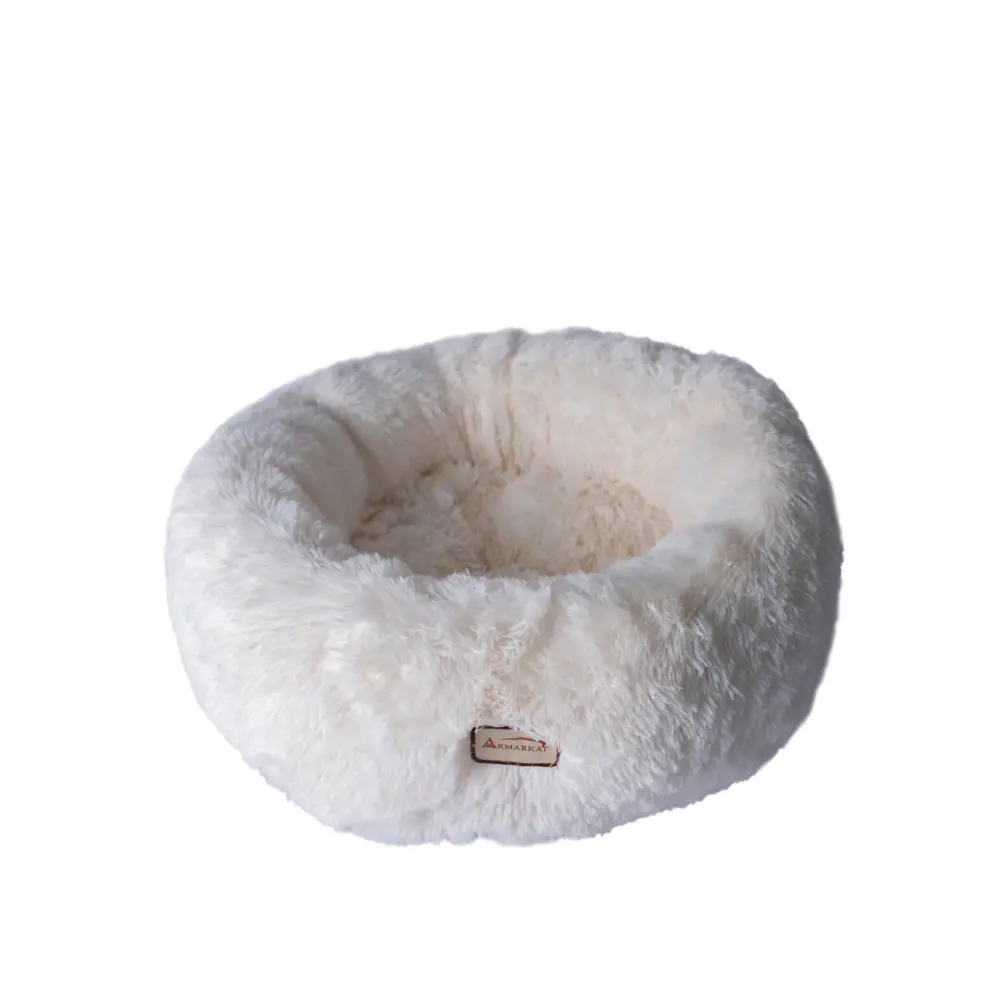
Practically, that means a retreat your dog can use and something to do when they get there. A bed somewhere quiet, with sides, does more than any amount of reassurance. A food puzzle gives a wound-up dog a way back down.
-
Armarkat
Ultra-Plush Cuddler Bed for Cats & Small Dogs, Choose size
Price range: $55.95 through $72.95
Why it fits: Gives a dog somewhere to retreat to; walled sides matter more than softness when a dog wants to be out of the traffic.
-
3-in-1 Dog Enrichment Tube, Choose color
$42.95
Why it fits: Something slow to do after a tense moment; sniffing and licking help a wound-up dog settle better than being told to.


Watching your own dog deliberately
Reading body language is a practical skill rather than a body of knowledge, and it improves fastest with deliberate observation of one dog you know well. Spend a week noticing what your own dog does in five ordinary situations: when you pick up the lead, when a stranger passes the window, when another dog appears on a walk, when you reach for their collar, and when they settle in the evening.
Write down what you see rather than what you conclude. Ears forward, weight shifted back, tail low and still is an observation. Nervous is an interpretation, and interpretations are where mistakes happen. After a week, the patterns become obvious, and you will have a baseline for this specific dog that no general guide can give you.
Filming helps enormously. Real interactions happen faster than you can analyse them, and slowing a ten-second clip down reveals the lip lick, the head turn and the freeze that you walked straight past at the time.
Children, visitors and dogs
Most bites to children happen at home, with a familiar dog, during an interaction an adult thought was fine. The signals were almost always there, and they were almost always quiet. This is the single most useful application of everything on this page.
- Teach children to stroke the chest or shoulder, never the head or face
- No hugging, no climbing, no leaning over a dog
- Nobody approaches a dog who is eating, chewing or asleep
- A dog in their bed is off limits to everyone
- Children call a dog to them rather than going to the dog
- Any interaction ends when the dog moves away, with no following
- Adults supervise rather than trusting either party to manage it
The same applies to visiting adults, who are often worse than children. Giving guests a specific instruction, such as ignoring the dog until they have sat down, removes the greeting pressure that causes most of the signals on this page.
Common questions
Does a wagging tail always mean a happy dog?
No. A wag means the dog is aroused and engaged with something. A loose, broad, mid-height wag that moves the hips usually does mean a friendly dog. A high, stiff, fast wag over a tense body means something else entirely, and it is the combination most commonly misread before a bite.
My dog yawns a lot when visitors arrive. Are they tired?
Almost certainly not. Yawning out of context is one of the most reliable low-level stress signals in dogs. If it appears alongside lip licking, turning away or sniffing the floor, your dog is finding the situation hard and would benefit from somewhere quiet to go.
Why does my dog shake off when they are not wet?
A shake off is a reset. Dogs do it after something tense ends: a greeting that went on too long, a scary noise, a vet examination. Seeing one is useful information. It tells you the thing that just finished was more stressful than it looked.
Is a dog who shows their belly asking for a rub?
Sometimes. A loose, wriggly dog who flops over near someone they know usually is. A dog who rolls over stiffly, with a tucked tail and the head turned away, is appeasing rather than inviting, and rubbing the belly in that moment adds pressure rather than relieving it.
Can I trust a dog who is completely still and quiet?
Stillness is the signal to take most seriously. A dog who freezes has stopped negotiating. Give them space immediately rather than leaning in to check whether they are calm.
How long does it take to learn this?
The individual signals take an afternoon. Reading them in combination, at speed, on a real dog in a real situation, takes a few weeks of deliberate watching. Filming your own dog in ordinary moments and watching it back slowly is the fastest way to get there.
From here, the next step is reading the signals specific to pressure and discomfort. Our guides on signs your dog is stressed and signs a dog is in pain cover what to do when the picture is not just a mood, and things people do that dogs quietly dislike covers the habits that cause most of these signals in the first place.
Related guides
-
Guide
Signs Your Dog Is Stressed, and What Actually Helps
Stress in dogs rarely starts with a growl. This guide covers the early signals people walk past, the common household and walk triggers behind them, and the changes that genuinely lower a dog’s stress over time.
-
Guide
Signs Your Dog Is Bored, and What Actually Fixes It
Boredom, anxiety and pain produce similar behaviour and need completely different responses. This guide separates them, explains why more walking often fails, and sets out a weekday plan that works.
-
Guide
How Much Sleep Does a Dog Need, and What Disrupts It
Adult dogs sleep far more than most owners expect, and puppies more again. This guide covers typical totals by life stage, what interrupted rest does to behaviour, and how to set up a bed that actually gets used.