Journal Guide
Signs Your Cat Is Stressed, and the Changes That Help
Short answer
Stressed cats change their habits rather than making a scene: hiding more, using the litter box differently, overgrooming, eating less, or stopping play. Look for a change from your cat’s own normal, rule out illness with a vet, then fix the environment, usually by adding hiding places, height and more resources.
Cats hide stress on purpose
A cat who looks visibly distressed is already a long way down the road. Everything before that point is subtle, and most of it is a change in routine rather than a behaviour you can name. That is why the single most useful thing you can do is know what your cat normally does.
There is also an important overlap: almost every sign of stress in a cat is also a sign of illness. Urinating outside the box, eating less, hiding and overgrooming all appear on both lists. That is why a vet check comes before any behaviour plan, not after it.
Behaviour changes worth noticing
- Spending far more time hidden, or in a new hiding place
- Not coming out for meals, or eating only when the room is empty
- Stopping play that they used to enjoy
- Sleeping somewhere new, often higher or more enclosed
- Becoming clingy when they were independent, or the reverse
- Swiping or hissing at a housemate they used to tolerate
- Freezing in doorways or hesitating on familiar routes
- Scratching furniture in new places, particularly near doors
That last one is often misread as naughtiness. Scratching leaves a scent mark as well as a visual one, and a cat who starts marking entrances is usually telling you something about who else is using them.
Litter box and appetite changes
These two deserve separate attention because they carry the most information and the most medical risk.
- Urinating outside the box is the most common sign of feline stress, and also a classic sign of urinary disease. It is never spite and never a training failure.
- Going at the edge of the box, or with one foot out: the box, the litter or the location is the problem.
- Straining with little or nothing produced: this is an emergency, especially in male cats. Call a vet immediately.
- Eating noticeably less: a cat who stops eating for more than a day needs a vet, regardless of the reason.
- Eating much more: also worth a vet conversation rather than a behavioural one.
Safety note
A cat who repeatedly strains in the litter box without producing urine may have a blockage. This is life threatening and needs emergency veterinary care, not observation.
Overgrooming and hiding
Overgrooming shows as thin or bald patches, usually on the belly, inner thighs or forelegs, with the skin underneath often intact. Cats groom to self-soothe, so when stress rises grooming becomes compulsive. It is also caused by fleas, allergies and pain, which is another reason the vet comes first.
Hiding is normal in moderation. A cat who hides for a few hours in a busy house is coping sensibly. A cat who hides for days, who stops coming out to eat, or who hides somewhere genuinely unusual has moved past coping. Why cats hide covers the line between the two in detail.
The usual environmental causes
- A new animal or person in the house, including a new baby or a visiting dog.
- Not enough resources. One litter box, one bowl or one bed in a multi-cat home creates competition the cats never fight about openly.
- Resources in the wrong place: a litter box in a busy corridor, food next to a washing machine, water beside the food bowl.
- Nowhere high. Cats cope with pressure by going up. A home with no shelves, cat trees or cleared surfaces removes that option.
- Nowhere to hide. Covered beds, boxes and cubes are coping tools rather than decoration.
- Change: building work, moving furniture, a new routine, a holiday.
- Outdoor cats visible through windows, which is a common and badly underrated stressor for indoor cats.
The resource rule most homes break
Cats do not share well, and they are unusually bad at telling you so. The standard guidance is one of each key resource per cat, plus one spare, distributed around the home rather than grouped in one place. Key resources means litter boxes, water bowls, food bowls, resting places, scratching surfaces and high perches.
The word that does the work there is distributed. Two litter boxes side by side are one location to a cat, because a housemate sitting in the doorway blocks both. Three bowls in a row on the kitchen floor are one feeding station. Spreading resources across rooms and levels removes the bottlenecks where quiet conflict happens, and in many households it resolves a litter box problem without anything else changing.
This applies to single-cat homes more than people expect, too. One litter box in a utility room next to a noisy boiler is a single point of failure, and a cat who stops liking it has no alternative but the carpet.
Height, hiding places and routine
Almost everything that genuinely reduces feline stress is environmental, and most of it costs little. The rule of thumb for a multi-cat home is one of each resource per cat, plus one, spread around the home rather than lined up in one room.
- Add hiding places at floor level in the rooms your cat actually uses.
- Add height: a cleared shelf or a cube with a perch counts.
- Separate food, water and litter from each other and from through traffic.
- Add a second litter box in a different room, not next to the first.
- Keep feeding, play and quiet time at roughly the same times each day.
- Block the view of visiting cats at ground level with film or a screen if that is the trigger.
- Give it two to three weeks before judging whether it worked.
-
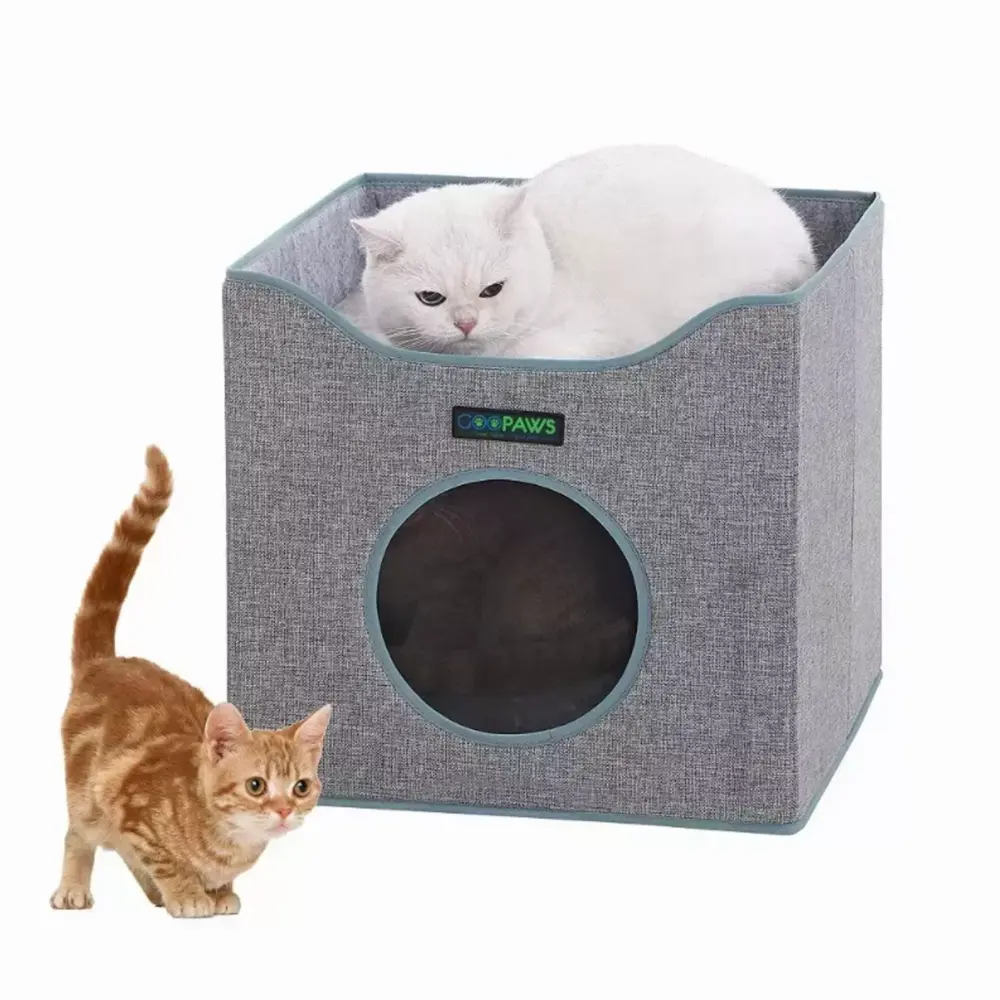
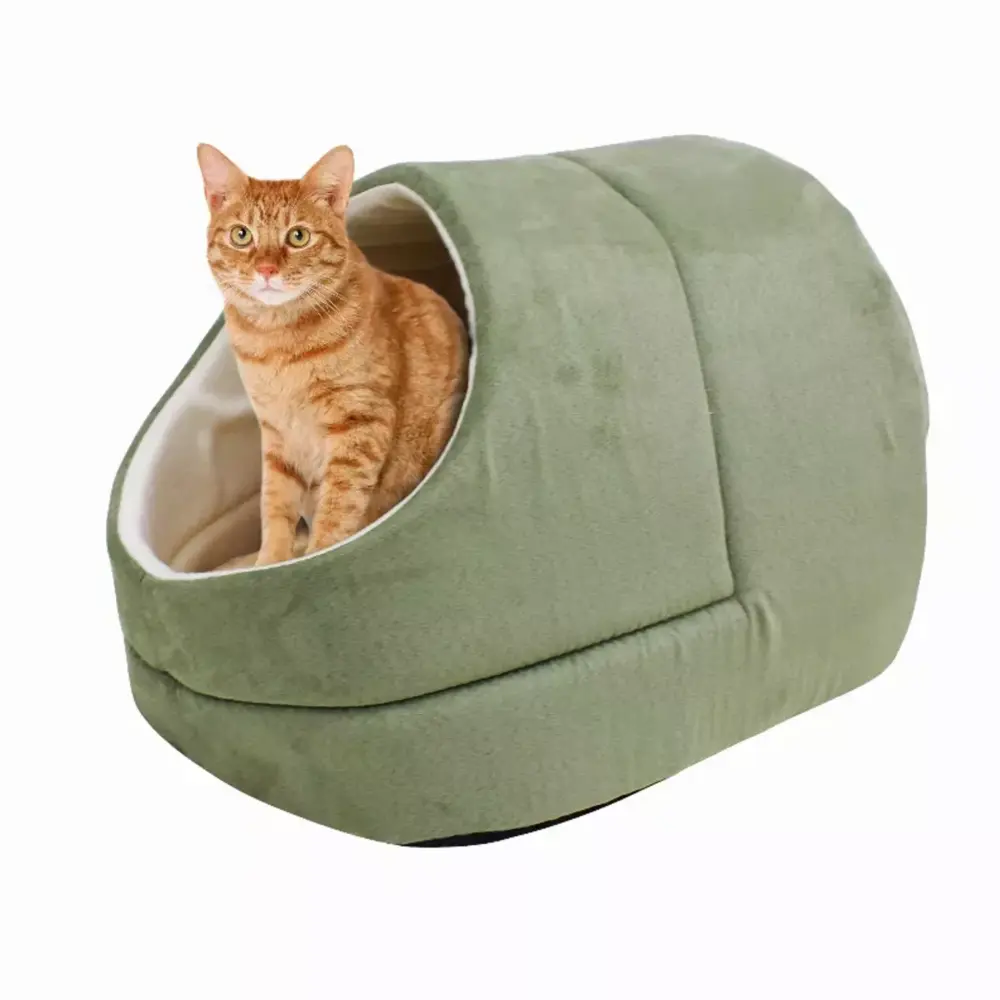
GOOPAWS
Covered Cat Cave Bed, Choose color
$45.95
Why it fits: An enclosed cave bed for a cat under pressure; a covered retreat is the single most useful thing you can add.
-
JESPET
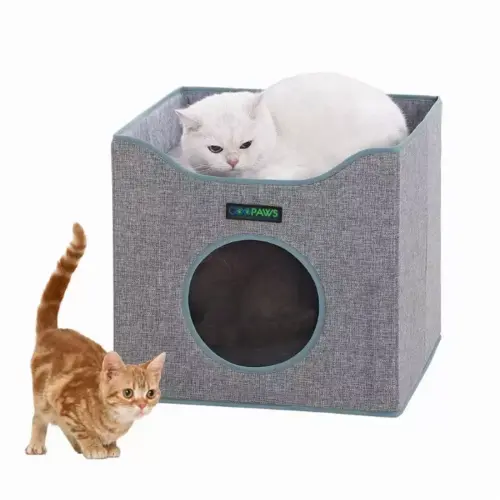
Foldable Cat Cube House with Reversible Cushions, Choose color
$52.95
Why it fits: A cube with a den below and a perch above; it covers hiding and height in one small footprint.
-
GOOPAWS
4-in-1 Self-Warming Cat Cave Bed, Choose color
$40.95
Why it fits: A bed that works as a cave or a flat mat; useful when you are not sure which your cat will accept.
-
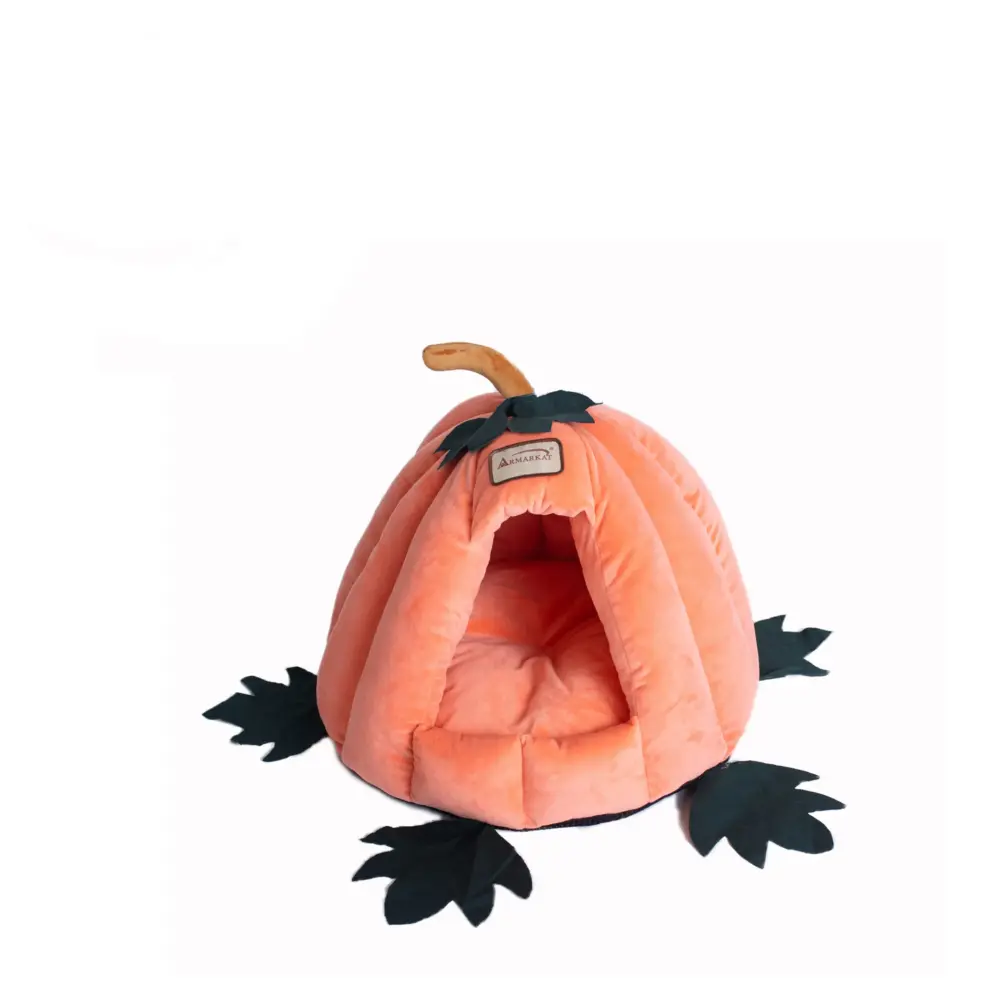
Armarkat
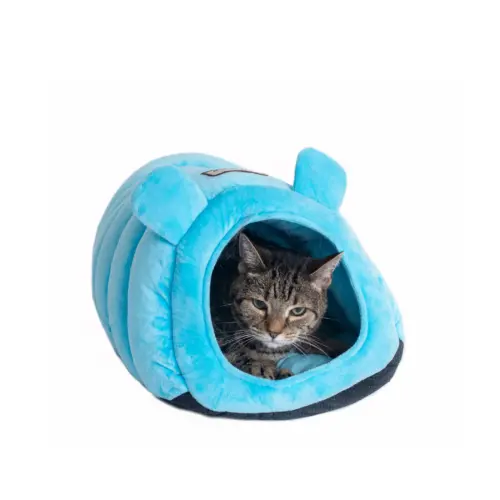
Tube Cat Bed, View product
$69.95
Why it fits: A covered tube bed for a cat who sleeps in cupboards; the shape is what gets used, not the fabric.

What does not help
- Punishment of any kind. Shouting, spray bottles and putting a cat near a mess all raise stress and damage trust. None of them address the cause.
- Cleaning with ammonia-based products. Ammonia smells like urine to a cat and encourages repeat marking. Use an enzymatic cleaner.
- Adding a second cat for company. Cats are not obligate social animals, and a stressed cat rarely wants a flatmate.
- Forcing interaction. Pulling a cat out from under the bed to reassure them makes the hiding place less safe, not more.
- Changing several things at once. You lose the ability to tell what worked, and the disruption itself is a stressor.
Common questions
How long before I should expect improvement?
Give environmental changes two to three weeks before judging them. Cats adjust slowly, and a change that is going to work usually shows a small improvement early rather than a dramatic one.
Is my cat urinating outside the box out of spite?
No. Cats do not do spite. House soiling is either a medical problem, a problem with the box itself, or stress and marking. Those are the three things to work through, in that order, starting with the vet.
My cat seems fine but hides all day. Is that stress?
Not necessarily. Many cats sleep in quiet places for most of the day and emerge in the evening, which is normal. What matters is whether they come out for food, play and company, and whether this is a change from their usual pattern.
Does a new baby or a house move always cause stress?
They are common triggers but not inevitable ones. Cats cope far better when one room stays unchanged with all their resources in it, when the routine around feeding and play stays steady, and when they are allowed to approach new things rather than being introduced to them.
Do calming sprays and diffusers work?
Evidence is mixed and they are not a substitute for fixing the environment. If you want to try one, treat it as an addition to the layout changes on this page rather than an alternative, and discuss it with your vet.
Introducing change without causing it
Most feline stress is triggered by change, which cannot always be avoided. What can be controlled is how it is introduced, and the difference between a smooth transition and a month of litter box problems is usually staging rather than luck.
- Keep one room completely unchanged, with food, water, litter, a bed and a hiding place.
- Introduce new objects in one place rather than rearranging a whole room.
- Let the cat investigate at their own pace; never carry them over to show them.
- Keep feeding, play and quiet time at the usual times throughout.
- For a new person or animal, start with scent and sound before sight.
- Expect two to three weeks of adjustment and judge it at the end, not the start.
Stress in multi-cat homes specifically
Cats who live together rarely fight openly, which is exactly why tension between them goes unnoticed. The signs are quiet: one cat consistently giving way, one cat eating only when the room is empty, one cat sleeping in a less desirable spot, or one cat spending far more time outside the shared areas.
The fix is almost always more resources in more places rather than intervention between the cats. More litter boxes in more rooms, more water bowls, more resting places at different heights, and more than one route through any space, so no cat can control a doorway. Multi-cat household setup covers the layout, and how to read cat body language covers reading the signals between them.
When a vet visit comes first
Book an appointment before anything else if your cat has stopped eating, is straining in the litter box, has urinated outside it, is overgrooming to the skin, is hiding for days, or has changed suddenly when nothing in the house has. Our guide on when to call the vet about a cat sorts the urgent from the routine, and signs a cat is in pain covers the overlap, because pain and stress look almost identical from the outside.
Related guides
-
Guide
Why Cats Hide, and When Hiding Means Something Is Wrong
Hiding is normal cat behaviour and also one of the clearest signs that something is wrong. This guide explains the difference, the timeline worth acting on, and why taking hiding places away makes everything worse.
-
How-to
How to Set Up a Cat Corner in a Small Home
A cat does not need a whole room, but they do need four things in one place: somewhere to hide, somewhere high, somewhere to scratch and somewhere warm. This guide builds that corner in a small home.
-
Guide
How Much Sleep Does a Cat Need? Normal Patterns and Red Flags
Cats sleep more than almost any other pet, and the pattern is as informative as the total. This guide covers normal sleep by life stage, why cats wake you at five in the morning, and the changes that matter.