Journal Guide
How Much Sleep Does a Cat Need? Normal Patterns and Red Flags
Short answer
Most adult cats sleep twelve to sixteen hours a day, and kittens and senior cats often sleep up to twenty. Cats are naturally most active at dawn and dusk, so waking you early is normal rather than a problem. A clear increase in sleeping, or a cat who stops using favourite sleeping spots, is worth a vet visit.

Cats sleep more than you think
Sleeping two thirds of the day is normal for a cat and not a sign of boredom or depression on its own. Much of it is light sleep rather than deep sleep, which is why a cat who looks fast asleep can be on their feet in a fraction of a second.
| Life stage | Typical daily sleep |
|---|---|
| Kitten | Up to twenty hours |
| Adult | Twelve to sixteen hours |
| Senior | Sixteen to twenty hours |
| Unwell at any age | More, and in unusual places |
As with dogs, the number matters less than the pattern. A cat who has always slept fourteen hours and now sleeps nineteen is telling you something, even though nineteen is within the normal range for a cat of a different age.
Why cats wake at dawn and dusk
Cats are crepuscular, meaning they are naturally most active in the hours around sunrise and sunset. That is when their prey moves. It is also why so many cats become energetic at five in the morning and again in the early evening, and why asking a cat to be nocturnal or diurnal to suit you rarely works.
You can shift it, within limits. A proper play session followed by the main meal in the evening works with the hunt-eat-groom-sleep sequence and sends many cats into a long sleep afterwards. Feeding first thing in the morning in response to wake-up calls does the opposite and reliably makes it worse. Stopping a cat waking you at night covers the full approach.
Kittens, adults and senior cats
Kittens sleep in short, deep bursts between periods of intense activity, and like puppies they do not self-regulate well. A kitten who has become wild and bitey usually needs a nap in a quiet room rather than more play.
Senior cats sleep more and move less, which makes it easy to miss the point at which more sleeping becomes a symptom. Pay attention to where they sleep as well as how long: an older cat who has moved from the top of the wardrobe to a chair at floor level has usually stopped jumping, and that is a mobility signal rather than a preference.
Where cats choose to sleep
Cats pick sleeping spots for warmth, safety and vantage point, roughly in that order. That is why they end up on radiators, laptops, laundry, the sunny patch on the carpet and the top of a bookcase.
- Warm. Cats are comfortable several degrees warmer than most people keep a house.
- Enclosed or against something. Open beds in the middle of a room are the least used in the house.
- High, in a busy household. Height is how cats get distance from dogs, children and other cats.
- Multiple options. Cats rotate sleeping places, so three modest spots beat one expensive one.
- Quiet. A spot near a washing machine or a front door will be abandoned.
-
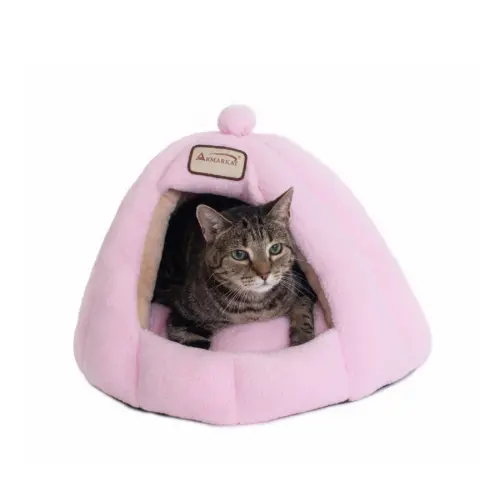
Armarkat
Pumpkin Cat Bed, View product
$79.95
Why it fits: An enclosed bed that traps a cat’s own warmth; covered beds get used far more than open cushions.
-
Armarkat
Gumdrop Cave Cat Bed, View product
$79.95
Why it fits: A deep cave bed with a thick pad, which suits cats who sleep pressed into a corner.
-
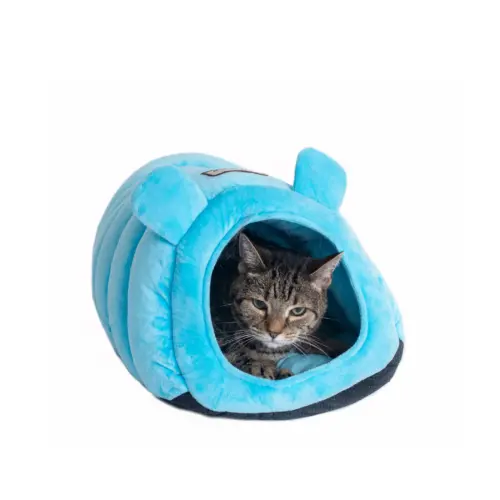
Armarkat
Tube Cat Bed, View product
$69.95
Why it fits: A covered tube with a washable mat inside; easy to move between the rooms your cat actually uses.
-
GOOPAWS
4-in-1 Self-Warming Cat Cave Bed, Choose color
$40.95
Why it fits: Works as a cave, a sack or a flat mat, so one bed covers winter and summer preferences.


Light sleep, deep sleep and the flick of an ear
Most of a cat’s sleep is light. In that state the ears still track sound, the eyes may be half open, and the cat can be fully alert in a fraction of a second. Deep sleep comes in shorter bursts, usually when the cat feels genuinely safe, and that is when you see the twitching paws and the occasional chirp.
This matters practically. A cat who only ever sleeps lightly, in an exposed spot, with the ears tracking the room, is not getting the rest they need. Giving them a covered bed in a quiet corner or a perch above head height often produces visibly deeper sleep within a few days, and in nervous cats that alone can change their behaviour.
Sleep changes worth noticing
- Sleeping noticeably more than usual, for more than a few days
- Sleeping in a new place, especially a hidden or unusual one
- Abandoning a high spot they always used
- Sleeping tightly hunched rather than curled or stretched
- Restlessness, repeatedly getting up and resettling
- Crying at night in an older cat
- Not responding to things that normally get them up, like food or play
The combination of more sleep, less grooming and less jumping is a common early picture in older cats, and it usually turns out to be pain rather than age. Signs a cat is in pain covers it in full.
Night crying in older cats
Loud night-time vocalising in a senior cat is worth a veterinary appointment rather than a behavioural fix. Several common conditions in older cats produce it, including hyperthyroidism, high blood pressure, failing eyesight or hearing, and cognitive change. Many of them are treatable.
In the meantime, a night light, keeping the layout unchanged, and a warm bed near where you sleep all help a disoriented cat settle.
Common questions
Is it normal for a cat to sleep twenty hours a day?
For a kitten or a senior cat, yes. For a healthy adult it is at the top of the range and worth watching, particularly if it is new or comes with any change in appetite, grooming or movement.
Why does my cat sleep on me?
Warmth, safety and bonding, in roughly that order. You are the warmest, safest surface in the house and you move predictably. It is a genuine compliment.
Should I wake a sleeping cat to play?
Better not. Wait for a natural waking point, which is usually around dawn or dusk anyway, and play then. Interrupted sleep makes cats irritable in exactly the way it makes people irritable.
My cat has started sleeping somewhere completely new. Is that a problem?
It can be. A cat who moves to a lower, more hidden or more enclosed spot has often stopped being able to reach the old one, or is feeling unwell. It is one of the more useful changes to notice.
Do cats sleep more in winter?
Many do, and it is normal. Shorter days and colder temperatures both encourage more sleeping, and cats seek out warmth. A noticeable seasonal shift is less concerning than a sudden one with no change in weather.
Where cats sleep through the year
Cats rotate sleeping places with the seasons and with the time of day, which is why a cat with several modest options is better served than one with a single expensive bed. Tracking where yours chooses across a year tells you what they actually want.
| Season | What cats look for |
|---|---|
| Winter | Enclosed, warm, off the floor |
| Spring | Sunny patches, windowsills |
| Summer | Cool, flat, hard surfaces, shade |
| Autumn | Back to enclosed and soft |
| Any season | High up, in a busy household |
This is also why a cat who abandons a favourite bed in July is not rejecting it. Put a flat mat or a cooling surface somewhere shaded in summer and the covered bed will be back in use by October.
Kittens, and why they crash
Kittens alternate between extreme activity and complete collapse, often within the same minute. That pattern is normal and does not need managing, with one exception: an overtired kitten becomes bitey and frantic in much the same way an overtired puppy does, and the answer is a quiet room rather than more play.
Kittens also sleep more deeply than adults, including the twitching and small noises that worry new owners and are entirely normal. Let a sleeping kitten sleep; waking one for a cuddle is one of the quickest ways to teach a cat that laps are not safe places to rest.
Helping a cat sleep through your night
- Play properly in the evening, with a real catch at the end.
- Feed the main meal straight after that session.
- Keep the last hour of the evening quiet and predictable.
- Leave a warm, enclosed bed somewhere your cat already chooses.
- Do not get up and feed in response to morning wake-up calls, or you reinforce them.
- If your cat is genuinely hungry at dawn, leave a small portion in a timed feeder instead.
The dog version of this page is how much sleep does a dog need, and the daily context sits in a realistic daily cat care routine. If your cat has also started hiding, read why cats hide.
Related guides
-
Guide
Why Cats Hide, and When Hiding Means Something Is Wrong
Hiding is normal cat behaviour and also one of the clearest signs that something is wrong. This guide explains the difference, the timeline worth acting on, and why taking hiding places away makes everything worse.
-
Guide
Signs a Cat Is in Pain: The Quiet Changes That Matter
A cat in pain rarely cries. It shows in posture, in what they stop doing, in grooming and in the litter box. This guide covers the changes worth acting on and what to tell your vet when you call.
-
Guide
Signs Your Cat Is Stressed, and the Changes That Help
Cats hide stress by design, so it usually shows up as a change rather than a signal: litter box habits, grooming, appetite and where they spend their time. This guide covers what to look for and the layout changes that fix most of it.