Gifts Checklist
Dog Birthday Ideas: A Dog-Safe Cake, an Outing and Calm Photos
Short answer
Plan your dog’s birthday or adoption day around what they love, like a long sniffing walk, one favorite friend or a food puzzle, not a party. Serve a “cake” made from part of their usual food on a lick mat or frozen in a slow feeder, and keep human cake, chocolate, sugar-free sweets and grapes out of reach.
Dog birthday checklist at a glance
Your dog won’t know the date, but they will notice a day full of their favorite things. Pick the two or three highlights your dog enjoys most and keep everything else familiar: meals at the usual times, the usual bedtime and a chance to rest between the busy parts.
- A week or so ahead: decide on a social day or a quiet one, choose the outing, and invite no more than one or two dog friends your dog already plays well with
- The night before: build the “cake” from part of tomorrow’s food and freeze it, and set up a quiet room if anyone is visiting
- Morning: the outing, at your dog’s pace and at the coolest, calmest time of day
- Midday: a few minutes of photos while your dog is relaxed but still interested, then the “cake” as the payoff
- Afternoon: a short visit from a dog friend, with toys and food put away first, or a favorite game at home
- Evening: a smaller dinner to balance the “cake,” a sweep for dropped food and party scraps, and an early, quiet night
Tip
Don’t know your dog’s birthday? Many people with rescue dogs celebrate the adoption date instead, often called a “gotcha day.” The plan is the same, and some families also mark it with a donation to the shelter or rescue. If your dog joined the family recently, lean toward the quiet version, since new places and visitors can still feel like a lot.
What you can skip
- A costume or party hat your dog has never worn. A bandana or collar they already know photographs just as well.
- A party at the dog park. Unfamiliar dogs crowding around food and new toys are more likely to squabble than to play.
- A slice of your own cake. Even plain sponge is sugar and butter your dog doesn’t need, and chocolate, xylitol or raisins can hide in frosting and fillings.
- A stack of new toys and treats. One toy is easier to supervise, and several new foods in one day invite an upset stomach.
The “cake”: a lick mat or a frozen bowl
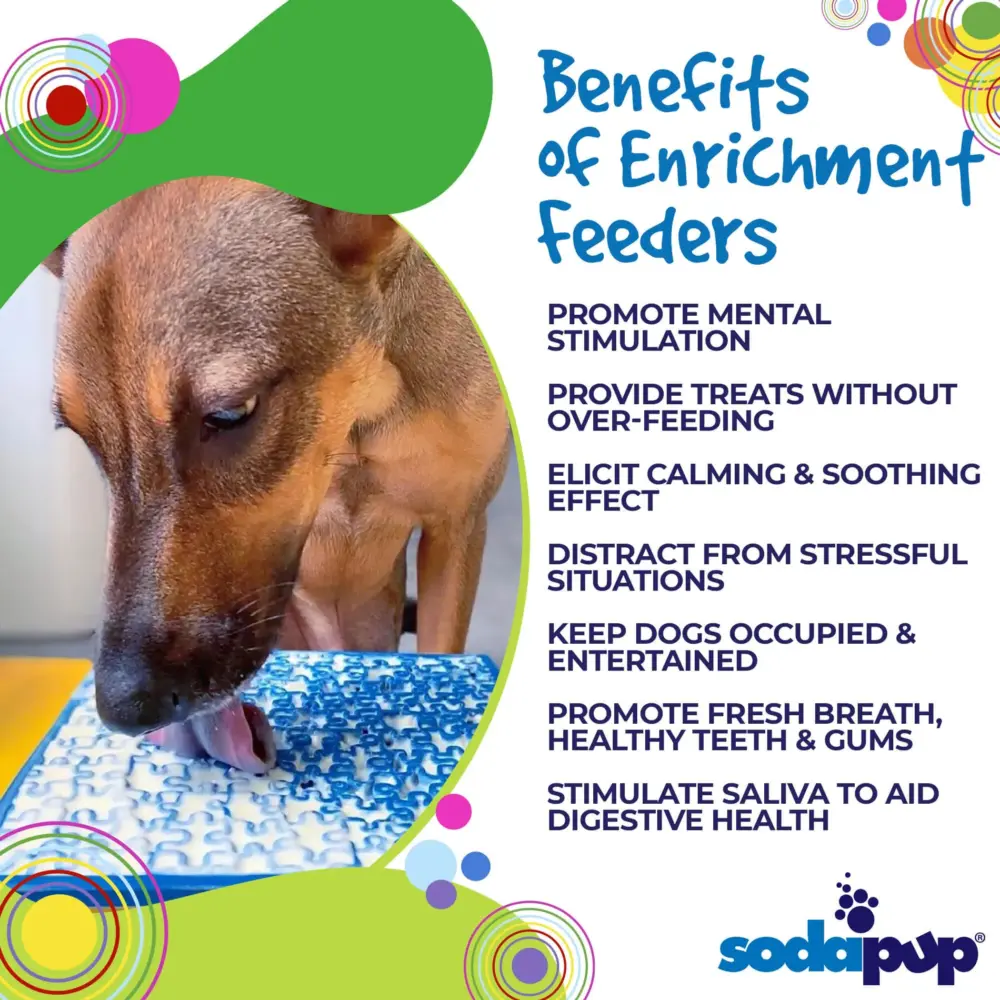
To a dog, the best part of a cake isn’t how it looks but having something good to work at. A spread pressed into a lick mat, or a layered mix frozen in a deep slow feeder, stretches a small portion into a long, absorbing session, and both start from food your dog already eats.
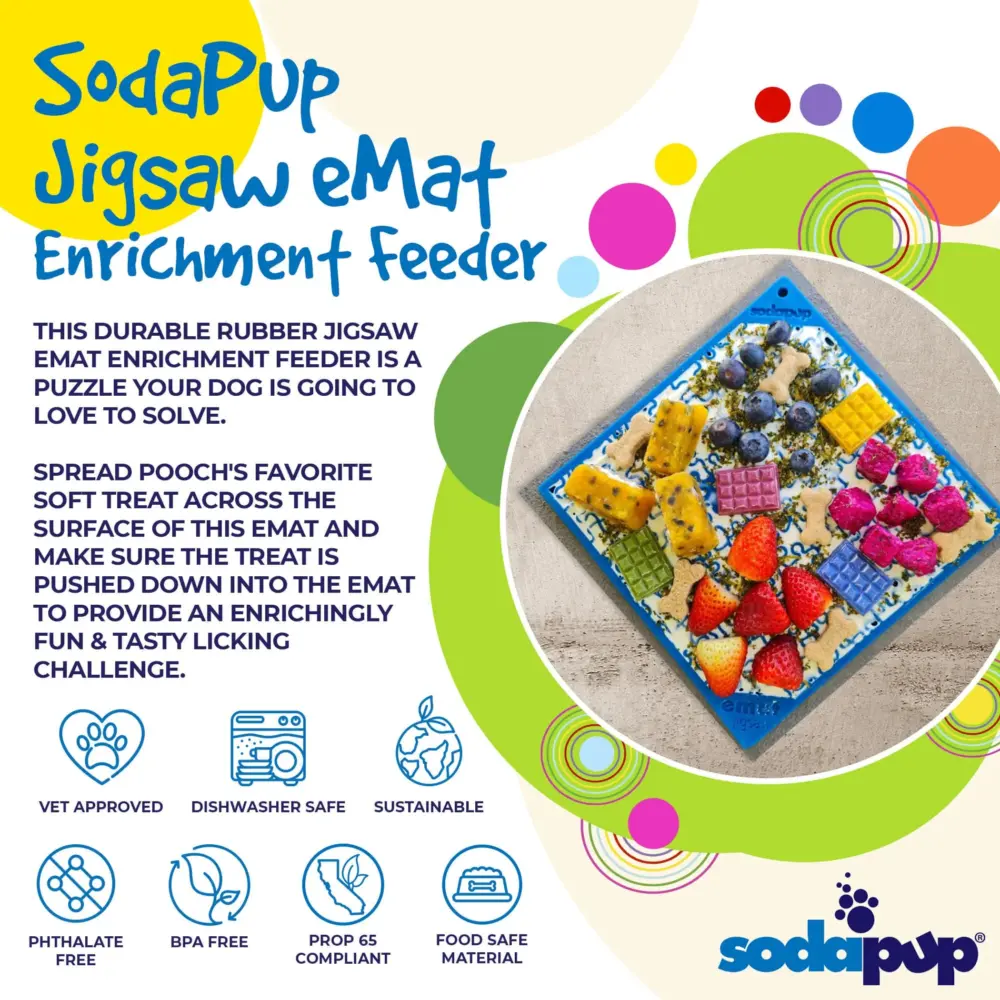
A lick-mat “cake”
- Base: your dog’s usual wet food, or a little kibble soaked in warm water and mashed, pressed down into the grooves.
- Frosting: a few dots of plain, unsweetened yogurt, plain pumpkin purée or peanut butter without xylitol, if your dog already eats it.
- Sprinkles: a few pieces of the usual kibble pressed in on top.
- Optional: freeze it flat overnight so it lasts longer.
For more spreads and how long to freeze them, see our guide to what to put on a lick mat.
A frozen-bowl “cake”
A deep slow feeder holds a thicker, layered “cake” than a flat mat can. Spoon in a layer of wet food, press kibble into the ridges, smooth a thin layer of the “frosting” over the top and freeze it overnight. Give a rock-solid bowl a few minutes on the counter before it goes down. This version suits the dog who swallows treats whole; our guide on how to slow down a dog that eats too fast explains why ridges help.
Portions, new foods and candles
- Make it from the day’s food. VCA’s rule of thumb leaves about 10% of daily calories for treats and snacks, so build the “cake” from part of dinner and serve a smaller dinner.
- Stick to foods your dog already handles. A birthday is the wrong day to try a new ingredient. If your dog eats a prescription diet or has a sensitive stomach, check with your veterinarian before the day.
- One “cake” per dog, in separate spots, so nobody guards theirs or raids a neighbor’s.
- No lit candle near your dog. A curious nose and a wagging tail are close to the flame, so put the candle on your own cake across the table.
- A cake from a pet bakery? Read the ingredient list as you would any treat, serve a small slice rather than the whole thing, and count it toward the day’s food.
Safety note
Keep your dog company while the “cake” disappears. Lick mats and slow feeders are for licking and eating, not chewing: if the edges start getting gnawed, lift it away, and if you suspect a piece went down, phone your veterinarian.
Our suggestions are limited to Nilosi’s own catalog, and these two suit the job: both are dishwasher safe and easy to fill the night before. Other mats and feeders are in our feeding and enrichment collection.
-
SodaPup
Jigsaw Enrichment Lick Mat for Dogs & Cats, Choose color
$25.95
Why it fits: Turns a small birthday portion into a long lick session, with jigsaw grooves that hold a wet-food base and dots of plain yogurt on top.
-
SodaPup
Honeycomb Slow Feeder Dog Bowl, View product
$30.95
Why it fits: Holds a layered frozen birthday mix of wet food and kibble, and its deep honeycomb ridges make a fast eater work for every mouthful.


What to keep off the menu and the floor
Birthdays put unusual food at coffee-table height and decorations on the floor, and well-meaning guests are the usual weak spot. Before the cake comes out, ask everyone not to share from their plates.
Off the plate
- Chocolate cake, brownies and coffee desserts. Chocolate and caffeine can bring on vomiting, diarrhea, tremors and seizures.
- Anything sugar-free. Xylitol can send a dog’s blood sugar crashing and harm the liver, and the FDA notes it can turn up in cakes, muffins and “skinny” ice cream.
- Grapes and raisins, on fruit platters and baked into cakes, which can damage a dog’s kidneys.
- Nuts, macadamias above all. Macadamias can cause weakness, tremors and vomiting, and most nuts are very fatty.
- Buttercream, cheese boards and meat trimmings. Rich, fatty food can upset the stomach and, in some dogs, inflame the pancreas.
- Onion and garlic in dips, burgers and seasoned meat, which harm red blood cells.
- Bones and skewers from the grill. They can cause internal injuries or a blockage.
- Ice cream, whipped cream and milk. Dogs make little lactase, the enzyme that digests milk, so a coffee-shop pup cup should be a small taste at most, or none for a sensitive dog.
The ASPCA keeps a longer list of people foods that are risky for pets. If a food isn’t on either list and you’re unsure about it, leave it out.
Off the floor
- Balloons: a pop can frighten a noise-sensitive dog, and the scraps are easy to swallow. Gather burst pieces at once, or skip balloons.
- Ribbon, string and confetti, which can tangle or lodge in the gut. Puppies are the likeliest to try.
- Wrapping paper, tags and toy packaging, straight into a trash bag as each gift is opened.
- Plates, glasses and handbags off low tables and the floor. Alcohol is dangerous to dogs, and a purse can hold gum, mints or medication.
Safety note
Dog raided the party table? Phone your veterinarian or an emergency clinic straight away, with the wrapper or label in hand, instead of waiting to see what happens, and only induce vomiting if a veterinarian advises it. You can also reach the ASPCA Animal Poison Control Center around the clock at (888) 426-4435 (it may charge a consultation fee).
An outing: a favorite walk or somewhere new
For most dogs, the real present is a new set of smells. A long, unhurried walk with time to investigate every post usually means more than any gift, and it takes the edge off before visitors or photos.
- The favorite walk, slowed down. Let your dog choose some of the turns and linger where they like, even if you cover half the usual distance.
- A new trail or park. Check that dogs are allowed and what the leash rules are, bring water and waste bags, and choose a distance your dog already manages comfortably.
- A dog-friendly patio or coffee shop, only for a dog who can already settle in public. Keep it to one coffee at an off-peak time; our guide to taking a dog to a restaurant patio covers manners and when to leave.
- A visit to a favorite person, such as a relative, a neighbor or a former foster, if your dog lights up around them.
- Weather first. Go early on a hot day, when pavement is cooler, and shorten the plan on a cold or stormy one.
- Older dogs and young puppies. Keep it shorter, flatter and slower for a senior, and for a puppy who hasn’t finished vaccines, ask your veterinarian about busy public places first.
Guests and playmates: keep it small
Decide by your dog, not by the guest list. A dog with a best friend will love a visit from them. A dog who is wary of other dogs, children or crowds may enjoy the day far more with just the household, and that still counts as a celebration.
- One or two dog friends your dog already knows, close in size and play style. Our guide to setting up a dog playdate covers the first meeting and how to tell play from a fight.
- Toys, chews and food bowls put away before guest dogs arrive, so nobody has anything to guard.
- A retreat: a quiet room or crate with water and a bed, behind a closed door or gate so visitors don’t follow.
- House rules for guests: no food from plates, no reaching for a dog who hasn’t come over to say hello, and the front door shut behind them.
- Kids and dogs together only with an adult in the room, and a clear path for your dog to leave whenever they want.
- Your cat in a room of their own, with food, water, litter and a hiding spot, until the visitors have gone.
- A short party. End play while everyone is still enjoying it, before tired dogs get grumpy.
Photos without the stress
The best birthday photo is usually taken in the first minute, before your dog gets bored. Plan a short session after the walk, when your dog is relaxed, and before the “cake,” while they’re still keen on you and your treats.
- Good light, simple setup. Sit by a window or step outside into open shade; a dog won’t wait while you arrange a backdrop.
- Get down to your dog’s eye level, and use burst mode or video so you can choose a frame later.
- Hold a treat just above the lens to bring their eyes to the camera, and hand one over every few shots.
- Use a cue your dog already knows. The classic shot of a dog sitting politely beside the “cake” needs a solid wait; our guide to teaching a dog to wait for food builds one. Without it, photograph the licking instead.
- Familiar props only. A party hat suits only a dog who already accepts one calmly; keep the elastic loose and take it off straight after the photo.
- Five minutes at most, and stop on a good shot and a treat. If you see the stress signals in the AKC’s guide to telling if your dog is stressed, such as lip licking, yawning, whale eye, pinned-back ears or turning away, stop sooner.
- Group photos with your dog standing or sitting, not lifted or hugged by a guest they barely know.
A quiet finish to the day
Excitement is tiring, even the happy kind. Hand the evening back to your dog’s normal routine, and use the date as a reminder for a few yearly jobs.
- A smaller dinner at the usual time, to balance the “cake.”
- A sweep of the floor and yard for dropped food, balloon scraps, ribbon and skewers once the guests have gone.
- A quiet spot and an early night, with visitors and other dogs out of the way.
- A gift, if you’re giving one, opened together. One new toy is plenty. Our guide to what to get your dog for Christmas matches toys to tuggers, carriers and lickers, and it works in any month; browse the rest in our toys and play collection.
- An eye on tomorrow. If your dog vomits, has diarrhea or seems off after the party, call your veterinarian.
- A yearly check: the phone number on the ID tag, the contact details on the microchip registry, and whether your dog is due for a check-up.
Related guides
-
Buying guide
What to Get Your Dog for Christmas: Gifts for Tuggers to Nappers
Choose your dog's Christmas gift by what they already do: a stuffing-free fire hose toy for tuggers and shredders, a plush fox for gentle carriers, a lick mat or slow feeder for lickers and fast eaters, and a cuddler bed or coat for small dogs, plus safety checks, unwrapping and gifts to skip.
-
Checklist
When to Replace Dog and Cat Gear: A Monthly Wear Check
A five-minute monthly check for everything your dog or cat uses: the wear signs that mean a collar, harness, leash, toy, bowl, lick mat or scratcher insert should go, the fit checks growing and changing pets need, and what only needs a wash.
-
Checklist
Adopting a Senior Dog Checklist: What to Ask, Buy and Set Up
Adopting an older dog from a shelter or rescue? Ask the right questions before pickup, buy less than you would for a puppy, set up a quiet corner with easy footing, and arrive at the first vet visit with the records that matter.