Description
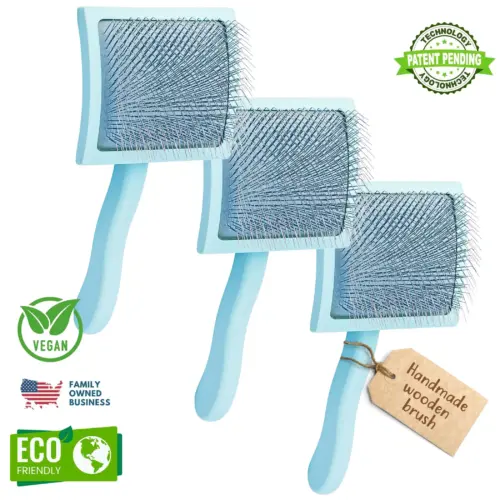
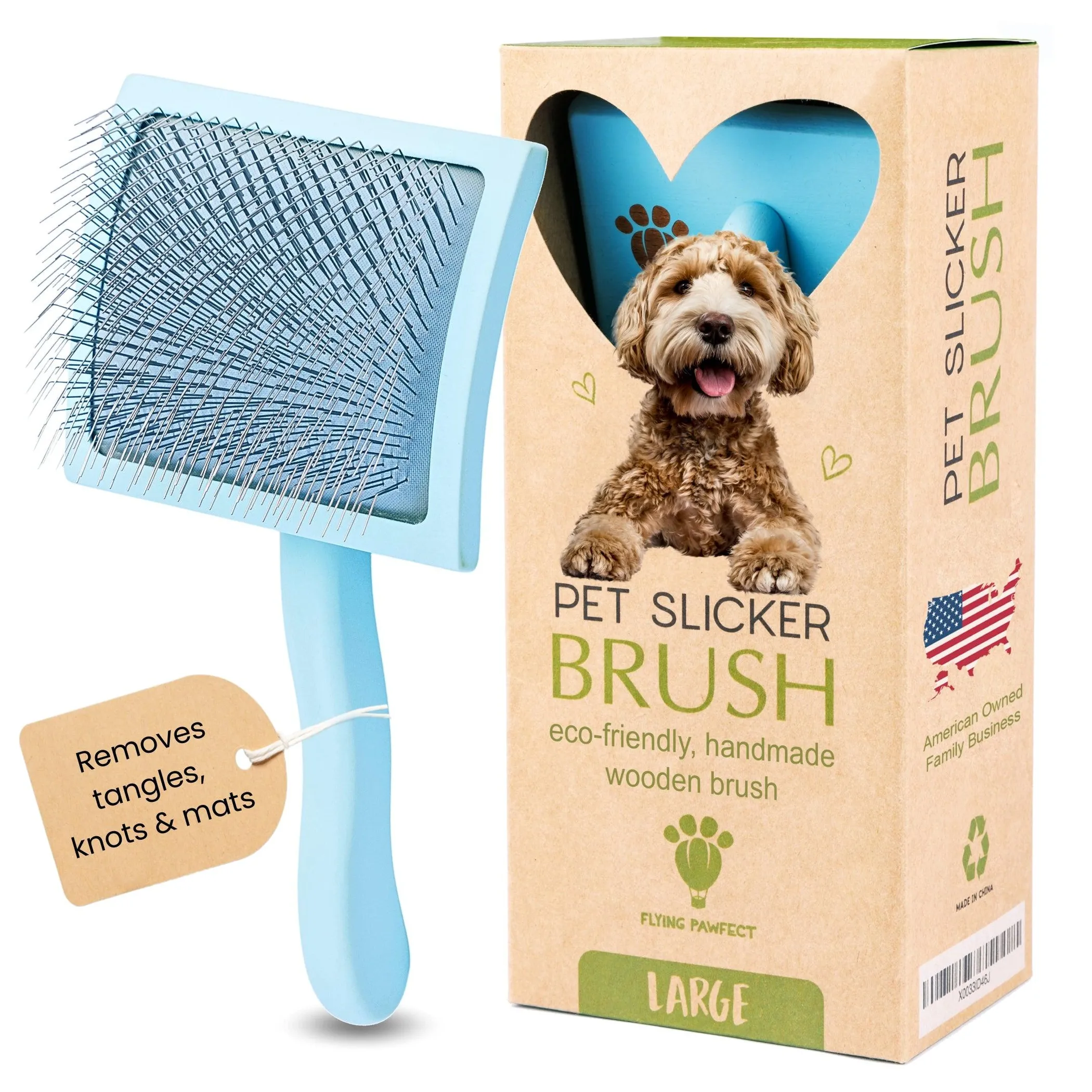
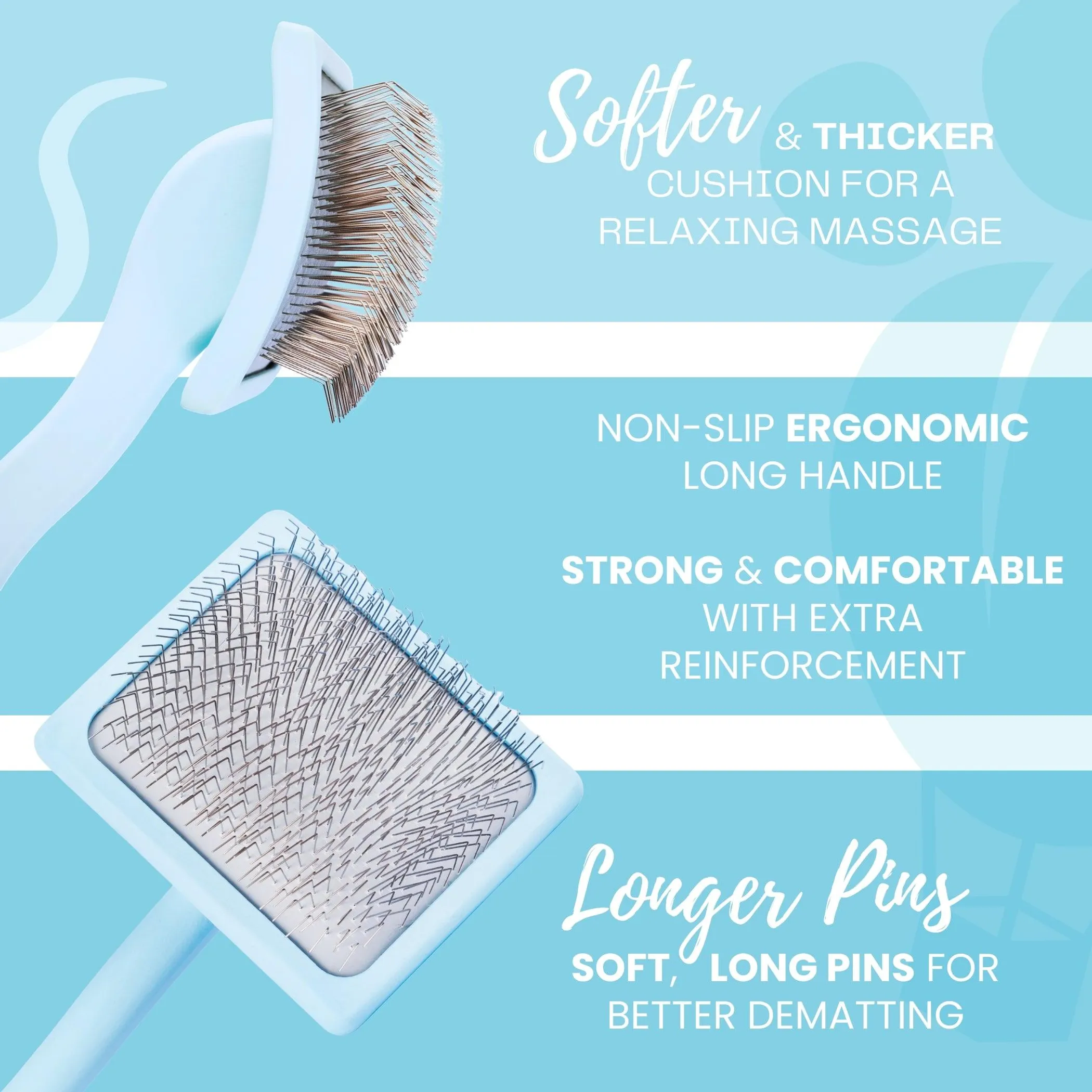
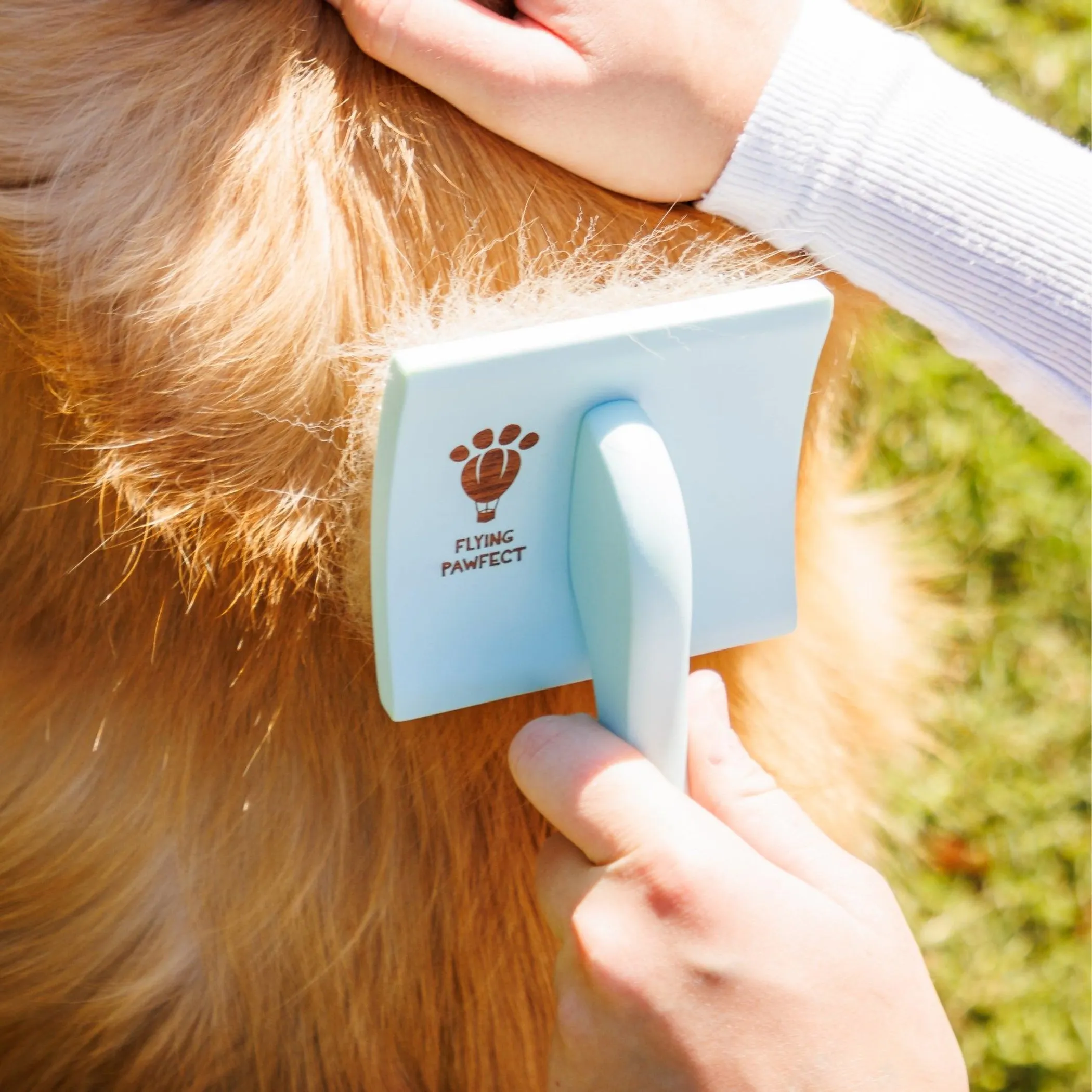
A curved brush head sits against a rounded body instead of bridging it. On a dog’s ribs, shoulders and hindquarters that means the pins stay in the coat all the way through the stroke, so you get the undercoat out in fewer passes.
Details
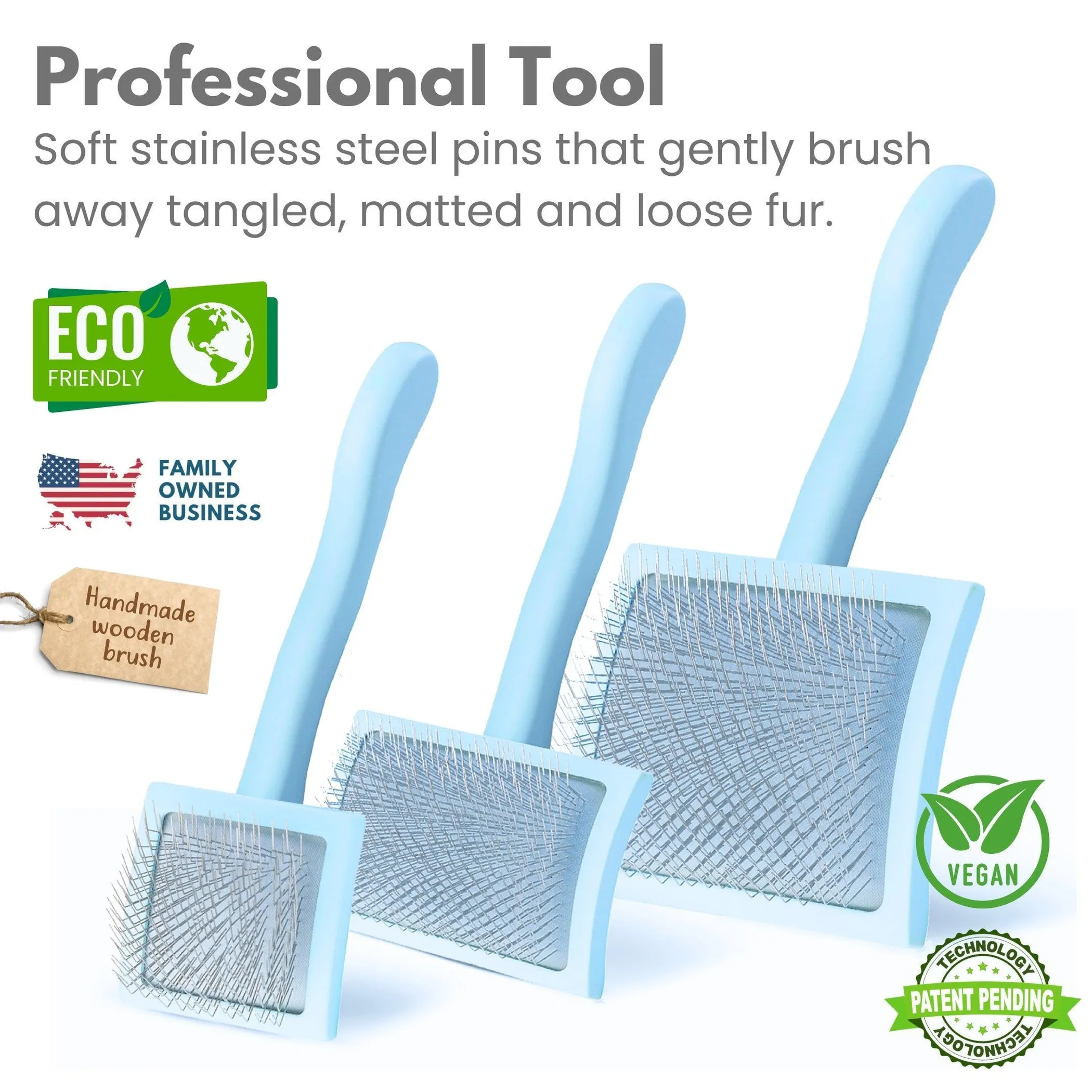
- Soft stainless-steel pins — longer and softer than the pins on a standard slicker, so brushing is less sharp on the skin.
- Long slip-resistant handle — an angled grip that takes some of the load off your wrist on a long session.
- Curved head — follows the contour of the body, best over the back, sides and rear.
- Three sizes — small, medium and large, in blue or coral.
- Loose hair, undercoat, mats and tangles — what a slicker is for, on long and double coats.
How to use it
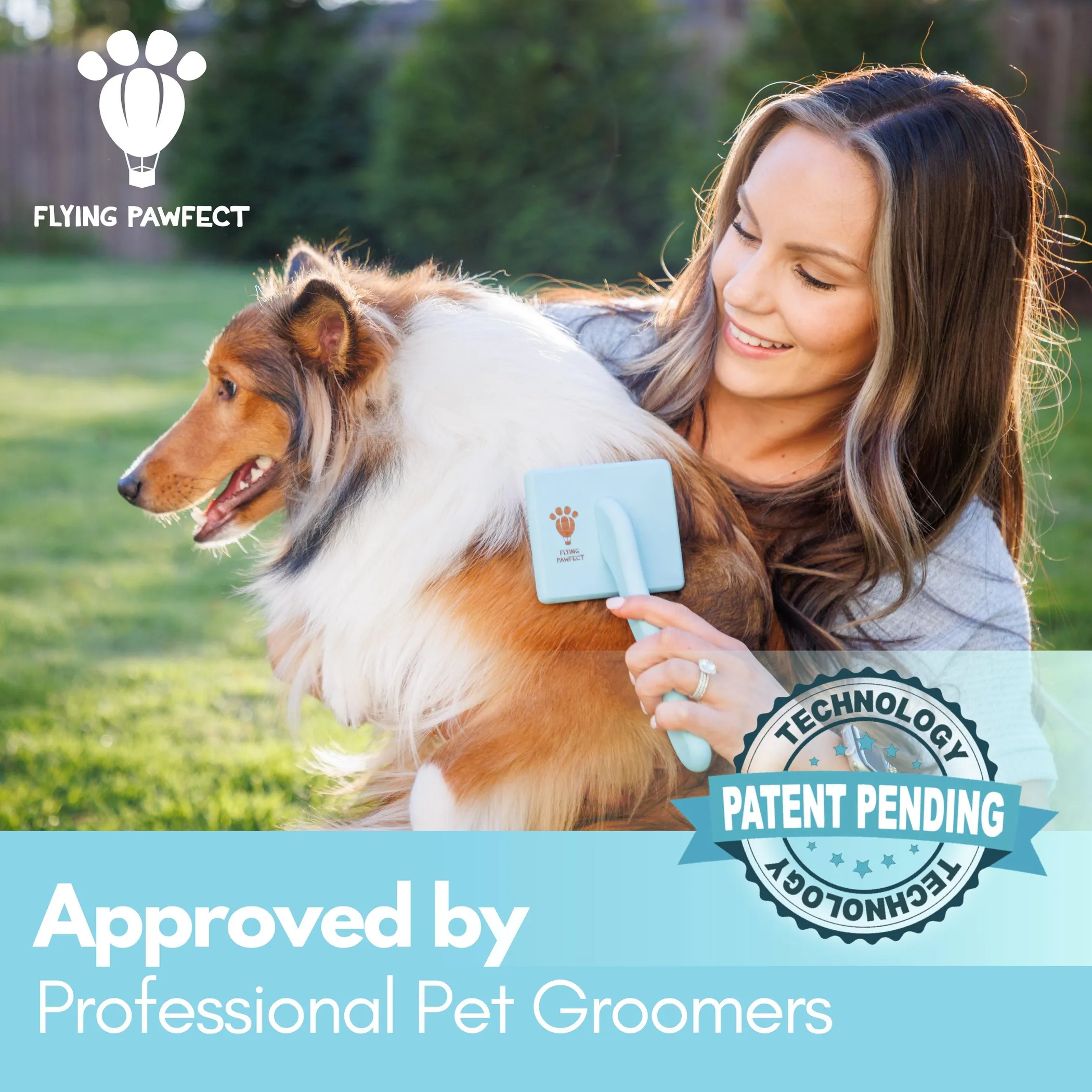
Brush in the direction the coat grows, in short strokes, with the pins flat rather than dug in. Work in sections and stop at the skin, not against it. How to use a slicker brush has the technique, and slicker versus deshedding tool explains which one your dog actually needs.